




Inherited or Gifted Home Taxes: What Heirs Need to Know for 2025
Fact Checked
FileTax.com content is reviewed for accuracy, timeliness, and completeness. It undergoes a structured editorial review process involving writers and expert reviewers.
More on our editorial standards Meet our editorial team Todd MonahanTax Content Specialist
 Lea Uradu, JDTax Content Reviewer
Your Takeaways:
- Inherited homes usually receive a stepped-up basis, lowering capital gains tax.
- Gifted homes keep the giver’s original basis, often increasing taxable gain.
- You don’t owe income tax just for inheriting a home.
- Capital gains tax applies only when you sell the property.
- Stepped-up basis is based on the home’s fair market value at death.
Inherited homes generally receive a stepped-up basis, something that reduces capital gains tax when the home is sold. Gifted homes, however, retain the giver’s basis, potentially increasing taxes later on. We’ll explain how basis works and show you how to properly report inheritance on your taxes in this guide.
If you’re planning on gifting or receiving a home from or to a loved one, you’re probably already aware that it’s both an emotional and financial milestone. Once the initial shock fades, you’re left to deal with a whole world of tax rules that can feel overwhelming and confusing.
Is your new property considered an inherited home or a gifted home? How does the date of death or the current market value affect your potential capital gains tax bill? Do you owe estate tax or federal estate tax?
These questions (and plenty more) come up when you inherit assets like real estate, bank accounts, or even life insurance policies.
The rules for inherited home taxes might seem intimidating, but you’ll find that understanding a few important concepts can help you plan, save money, and avoid stress. It doesn’t matter if your inherited property comes to you after a relative’s passing or if you’re the lucky beneficiary of a living gift: either way, knowing the difference in cost basis, how to track the monetary value, and what’s required on your tax return could save you thousands.
Let’s get started.
Inherited Homes and the Stepped-Up Basis
Definition: Stepped-up basis means the value of inherited assets is adjusted to fair market value at the time of the decedent's death. This change reduces future capital gains tax when the beneficiary sells the property and can shield you from owing tax on decades of appreciation. |
|---|
We’ll start by breaking down what the IRS says: Basis is simply the property’s original purchase price: whatever the owner paid for it, sometimes plus capital improvements, adjusted for several other factors. The basis is your key number for determining capital gains or losses when the property is sold.
Fair market value at the time you inherit or receive the property as a gift is what sets the stage. Your taxable gain or loss is the difference between your selling price and your adjusted cost basis.
For those wondering if inherited cash counts or what happens with retirement accounts or other assets, the same concept of basis applies, just with different reporting rules. When you inherit a home, the IRS typically gives you a nice tax break in the form of a step-up in basis. That means your cost basis is bumped up from what the decedent paid to the home’s fair market value on the owner’s death, also called the date of death value.
Using the alternate valuation date (six months later) can sometimes lower the estate tax if the property value drops, but most people stick with the death date value.
Example: Suppose your parents bought their home for $100,000 back in the 1980s, but when your last surviving parent passed in 2025, the property value was $400,000. Your new basis isn’t the $100,000 they paid, but $400,000. Sell the property a few months later for $420,000, and you only pay capital gains tax on the $20,000 increase, which is much less than if you’d inherited their base price. |
|---|
Still confused? For a full run-down on selling an inherited house, check out our guide. IRS Pub 559 has more details on this as well.
All in all, though, this step up can mean real savings, especially in markets like Maine, Maryland, or Massachusetts, where home values have soared and estate and inheritance taxes vary. For large estates that hit the federal tax exemption threshold (for 2025, it's $13.99 million), keep in mind an estate tax return using Form 706 may be needed.
Gifted Homes and Carryover Basis
Gifting can sometimes be even trickier than inheriting. When you receive a property through a gift, the IRS wants you to take over the giver’s original cost basis. This is called “carryover basis.”
So if your parents give you their home, originally bought at $150,000 but now worth $400,000, your basis for tax purposes is $150,000, not the current market value. If you sell shortly after for $420,000, you’re looking at a much higher capital gain ($270,000) than you would if you’d inherited it.
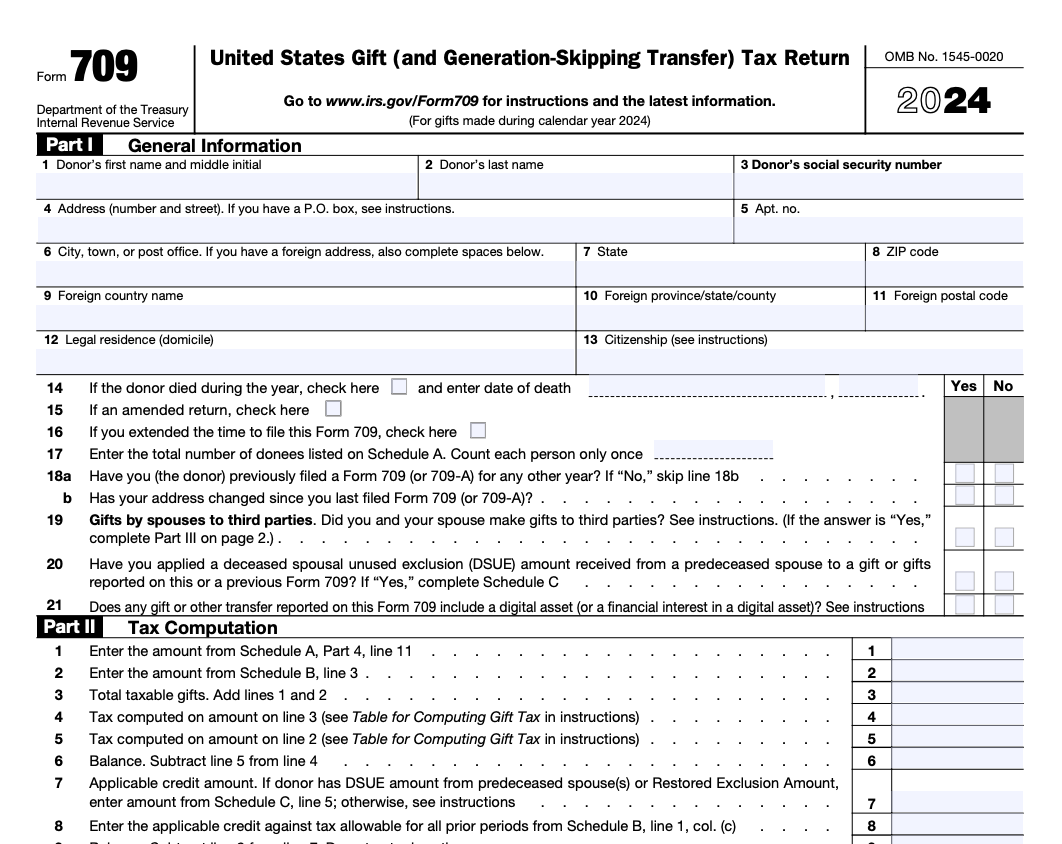
With gifted property, the gift tax might come into play. In 2025, any property transferred valued above $19,000 per person in a year goes on the gift tax return, also known as Form 709. The donor (not the recipient) files this paperwork.
Still, no actual gift tax is typically due until the donor’s total taxable gifts exceed their lifetime exemption (which is in the millions). This is why tracking taxable gifts and consulting a financial advisor or tax professional is so important.
Inherited vs. Gifted Home Basis: A Quick Comparison
Feature | Inherited Home | Gifted Home |
|---|---|---|
Basis Rule | Stepped-up cost basis (fair market value at date of death, or alternate valuation) | Carryover basis (original purchase price plus improvements, or donor’s basis) |
Your Basis Is | Value of the property at the decedent’s death or alternate valuation date | Same property’s base price (what the giver paid, plus upgrades, less any depreciation) |
Tax Impact | Potentially lower capital gains and estate/inheritance taxes owed after you sell—in many cases, you owe capital gains tax only on appreciation since inheriting | Potentially owe capital gains tax on many years of appreciation, meaning higher taxable income after a sale |
Giver’s Tax Filing | Estate may have to file estate tax return (Form 706) if the total value is above the federal and state exemption limits. This must be filed within 9 months of the decedent's death if the Estate's assets exceed the tax exemption threshold and/or if the Estate wants to transfer any unused exemption to a spouse. | Giver files gift tax return (Form 709) if value exceeds annual exclusion ($19,000 in 2025), tracked against lifetime exemption |
How to Report the Sale of an Inherited or Gifted Home
When you sell your inherited or gift home (or even inherited real estate through a trust), proper reporting saves a lot of headaches. You’ll want to start with Form 8949 and Schedule D as you fill out your personal tax return. For this, you’ll need details like:
- Address and description of the asset.
- Date you acquired the property (use date of death for inherited, date of gift for gifted).
- Sale date and current market value at sale.
- Original cost basis or stepped-up basis, depending on whether it’s inherited or gifted.
- Sale price (and capital improvements if applicable).
- Use Form 8949 and Schedule D to report any sale.
- Enter the correct basis (stepped-up or carryover).
- Attach Form 709 if reporting a gift.
Remember, if the home was a taxable gift, you need to attach Form 709 for the year the gift occurred if the value exceeded the exclusion. For inherited homes that are part of a taxable estate, record the details on any estate tax return, if required.
Example: If you inherited a home with a fair market value of $400,000 and sold it for $420,000, you’d only report a $20,000 gain as taxable income. If you received a gifted property, originally bought for $150,000 and sold for $420,000, you’re looking at a $270,000 taxable gain. |
|---|
Special Situations and Exemptions
Tax law isn’t one-size-fits-all. Here’s how certain factors affect your tax treatment:
- Joint Ownership with a Spouse: If you inherit assets such as a home after your spouse’s death, half the property often gets a stepped-up cost basis, while your half remains at the original basis.
- Inherited Rental Property: Home was rented out? You must recapture some depreciation at sale, which can count as ordinary income tax.
- Property Transferred Through a Trust: Trusts can pass along the step-up in basis, but always verify with the trust and check for other factors.
For large estates or if you inherit accounts or unusual property like retirement accounts, inherited cash, or business interests, specifics may change. Always reach out to a tax professional or estate planning attorney if you’re not sure.
Get the Best Tax Advice from FileTax.com
Whether you’ve inherited assets like a family home or you’ve received real estate as a gift, understanding your tax implications and cost basis is important. Most beneficiaries find that inheriting a home means a generous step up in basis, translating to much lower taxes when they sell.
Gifted real estate, on the other hand, often leads to higher tax bills due to the carryover of a lower original basis and higher taxable gains.
The bottom line is this: don’t wait until tax season to review your options. Check your property’s value and connect with a tax advisor or estate planning attorney for more.
💡 File your taxes with confidence. FileTax.com helps you report inherited and gifted property sales accurately and avoid basis errors.
Frequently Asked Questions
Inherited property comes to you after a decedent’s death, with a stepped-up basis to fair market value. Gifted property keeps the giver’s basis, which can be the original purchase price or the same property’s adjusted basis.


