



How Often and How Long You Pay Property Taxes
Fact Checked
FileTax.com content is reviewed for accuracy, timeliness, and completeness. It undergoes a structured editorial review process involving writers and expert reviewers.
More on our editorial standards Meet our editorial team Todd MonahanTax Content Specialist
 Lea Uradu, JDTax Content Reviewer
Your Takeaways:
- Property taxes are billed annually, semiannually, or quarterly, depending on location.
- You owe property taxes for as long as you own the property.
- Paying off your mortgage does not end property tax obligations.
- Taxes can be paid directly or through a mortgage escrow account.
- Escrow spreads payments into monthly installments.
Homeowners typically pay property taxes annually or semi-annually, either directly to their local government or through an escrow account. These taxes are a long-term responsibility for as long as you own your property.
When you become a property owner, you sign up for more than just monthly payments and closing costs. You’re also dipping your toes into the (often confusing) world of property taxes.
These are recurring bills you simply can’t ignore, even after you’ve paid off your mortgages and are holding your deed squarely in your hands. You might be wondering, how often do you pay property tax? Or for that matter, how long do you pay property tax? And will the day ever come that you see these bills disappear?
You’ll hear the phrase “annual property taxes,” but in reality, the honest answer to how often you’ll pay property taxes can depend on your state, county, and even your mortgage company’s policies. You’ll want to stay on top of these timelines so you can avoid extra costs or interest charges.
In this guide, we’ll tell you everything you need to know about billing cycles, payment options, due dates, and tax rates so you don’t get left behind.
How Often Property Taxes Are Billed
Definition: Property taxes are recurring local payments based on a home’s assessed value that fund community services such as schools, roads, and fire protection. These obligations continue for as long as you own the property. They’re billed annually, semiannually, or quarterly, depending on your state or county.
Property taxes are recurring payments, assessed by local governments, that are based on your property’s appraised value. Your property tax bill helps pay for community services like funding fire departments, repairing roads, keeping parks functional, running schools, and even maintaining libraries.
As long as you’re a property owner, you’ll have property taxes, even if the mortgage is paid off. If you owe money on your home, your mortgage company will often set up an escrow account to collect taxes as part of your monthly payments and submit the tax bill on your behalf.
Property tax bills are typically mailed annually, but the exact schedule will be determined by your local government. Your schedule might be annual, semi-annual, quarterly, or match up with your lender’s monthly mortgage payment.
Some common timelines include:
- Annually: In places like Texas, you’ll get a single property tax bill for the full tax year. The whole amount is payable by January 31.
- Semiannually: In states like California or Illinois, tax bills are split into two, letting property owners make two payments each year, generally due on set dates.
- Quarterly or Monthly: Some places, including parts of New York, require payments to be mailed quarterly, and certain mortgage companies collect a portion with your monthly payments, depositing it into your escrow account. This keeps your tax payments up to date with your mortgage payment schedule.
Curious about how exactly property taxes work? Our guide has more information.
How Property Taxes Are Paid (Direct vs. Escrow)

How you pay your property taxes will likely boil down to whether you self-manage your taxes or let your mortgage company handle the tax payments for you.
Direct Payment of the Tax Bill
If you own your property outright with no current mortgage, or if your mortgage company doesn’t require an escrow account, paying your property tax payments directly is often the simplest route. You’ll receive a property tax bill directly in the mail, or you might be able to check your balance and tax account number online.
You can generally pay with a money order, e-check, cashier’s check, or even in person at the tax office. Some local governments have a drop box for payments outside normal business hours. Always double check if your county accepts cash or only bank account transfers.
When you pay directly, make sure you note the due dates and set a savings account aside for the full amount, as late property tax payments can result in interest charges or tax liens on your property. Local governments don’t usually offer long grace periods, and unpaid tax bills may incite further action or penalties, like attorney fees.
Escrow Payment of Property Tax Bills
Most property owners choose the second model, which is having their property tax payments rolled into their mortgage payment. Here, your mortgage company will collect 1/12 of your estimated annual property taxes with every mortgage payment, depositing it into an escrow account.
When the bills arrive, your lender pays the entire tax bill from the escrow account on your behalf.
This is the simplest way to make sure your taxes are always paid up to date. A missed payment is rare and you don’t need to remember a dozen due dates.
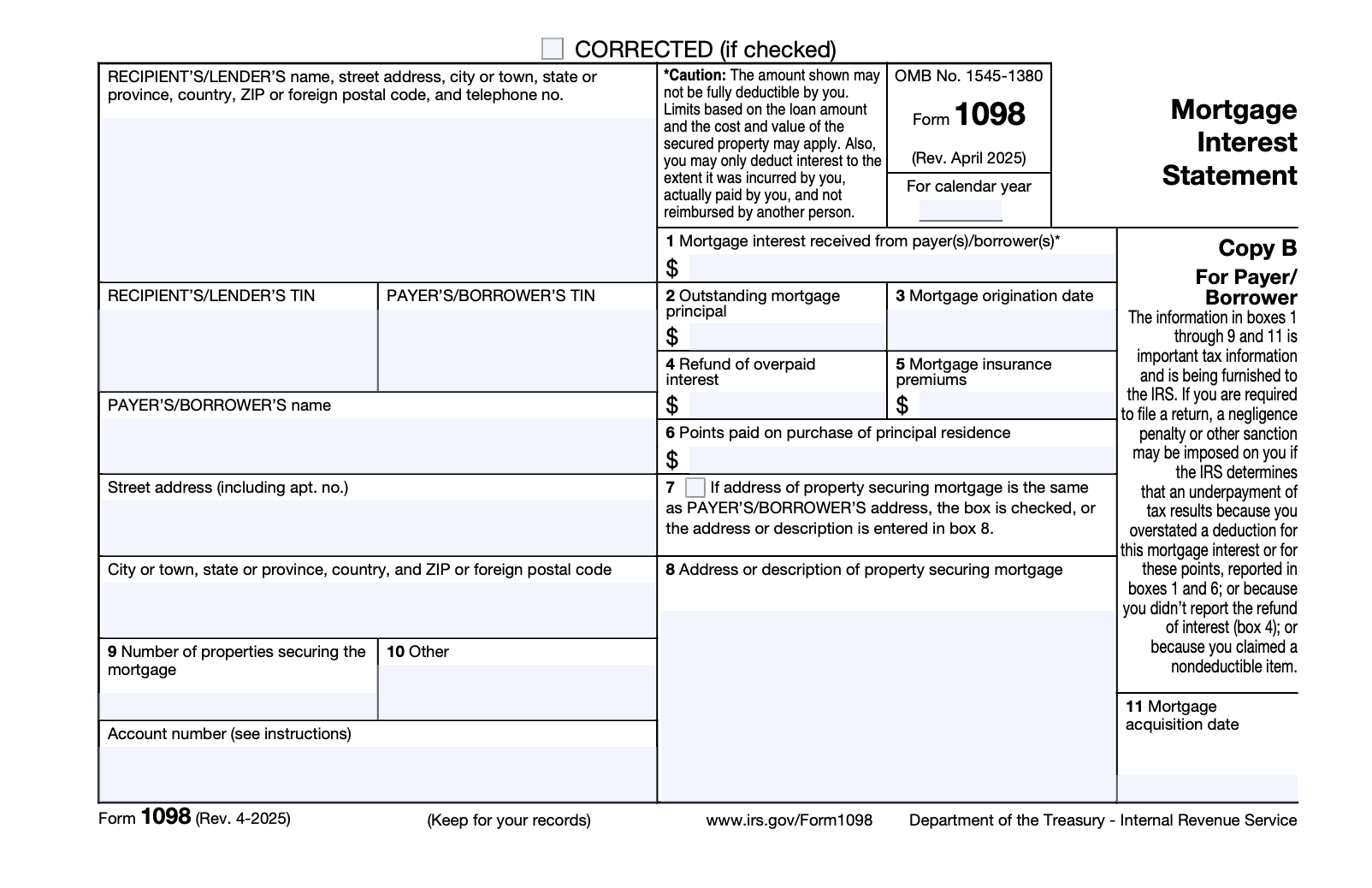
Example: Let’s say your annual property tax bill is $3,600. Your mortgage company will collect $300 monthly and handle your payment. At year’s end, you’ll receive Form 1098 (check Box 10 for the amount of property taxes paid), making your tax prep faster and easier. Escrow accounts don’t change the total owed, but they do save you from scrambling for a single payment. |
|---|
How Long Do You Pay Property Taxes?
Wondering how long you’ll be making property tax payments? You may not like hearing this, but unfortunately, it’s for as long as you’re listed as the property owner. Your tax responsibility is tied to the name on the deed, not to your mortgage status or payment schedule.
Paying off your mortgage doesn't automatically cancel out your annual property taxes. Every single property owner is responsible for paying taxes each year, whether or not they’ve finished their mortgage payments.
Exemptions do exist (such as for homeowners, veterans, and people with disabilities), and can limit, freeze, or reduce the amount, but you never stop paying property taxes unless you qualify for an exempt or special status.
Example: A homeowner who pays off a 30-year mortgage still owes annual property taxes unless exemptions apply. |
|---|
What Happens If You Don’t Pay Property Taxes?
Thinking about putting property taxes on the back burner? Don’t do it. Miss a property tax payment, and you could quickly rack up late fees, interest charges, and end up facing a tax lien. After a short grace period, local governments can place a lien on your property, and in some places, the next step is selling your unpaid tax bill or even foreclosure.
Example: If your county charges interest of 1% per business day on late tax payments, a $3,000 unpaid tax bill grows to $3,360 in just one year! Attorney fees and further action for unpaid tax payments can add more costs. |
|---|
If that all seems overwhelming, take a deep breath: escrow accounts and staying on top of your monthly payments can help you prevent these headaches by keeping you up to date. For more details on state-specific rules or what to do about unpaid or delinquent property taxes, see our guide to property tax laws or consult IRS Pub. 530.
Typical Due Dates by State
Timing is everything, especially when it comes to property taxes. Here’s a look at how often property tax payments are made in a few different states, which might affect how often you pay property taxes and when you need to have your funds ready:
Examples of Property Tax Due Dates by State
State | Billing Frequency | Typical Due Dates | Notes |
|---|---|---|---|
California | Semiannual | November 1 & February 1 | Discount for early payment, delinquent status after December 10 and April 10. |
Texas | Annual | January 31 | Penalties start Feb 1; check if a single payment is accepted. |
Illinois | Semiannual | June & September | Taxpayer pays for prior year’s appraised value. |
Florida | Annual | March 31 | Pay in full for up to 4% early payment discount. |
New York | Quarterly (varies) | Feb, May, Aug, Nov | Payments may be mailed quarterly depending on the county. |
Again, it’s important to double-check your next year’s due dates, methods of payment (e-check, drop box, in-person during regular office hours, etc.) and options for payment (money order, bank account, or cash) ahead of time.
Stay on Top of Property Tax Deadlines
Remember, property taxes never go away entirely. They’re ongoing homeowner expenses that keep your community running smoothly and are a natural part of owning a home. When you take the time to understand billing schedules and payment options, you can stay compliant and claim every deduction you might be eligible for.
Keep close track of deadlines and always follow your local assessor or treasurer’s most current requirements. Over time, you’ll likely find that paying property taxes becomes a built-in habit (admittedly, one you probably don’t enjoy very much!).
💡 File your taxes with confidence. FileTax.com helps you automatically claim any property tax deductions, SALT credits, and renter relief programs when you file online.
Frequently Asked Questions
Usually, property tax payments are required once or twice a year, but some states mail them quarterly or monthly. If you have an escrow account, you make monthly payments as part of your mortgage payment.


