




Property Tax Exemptions and Relief Programs: Save More on Your Property Bill
Fact Checked
FileTax.com content is reviewed for accuracy, timeliness, and completeness. It undergoes a structured editorial review process involving writers and expert reviewers.
More on our editorial standards Meet our editorial team Todd MonahanTax Content Specialist
 Lea Uradu, JDTax Content Reviewer
Your Takeaways:
- Property tax exemptions reduce your home’s taxable value—not your tax rate.
- Homestead, senior, veteran, and disability exemptions are the most common.
- Relief programs like circuit breakers and deferrals can further lower or delay taxes.
- Eligibility and benefits vary by state and local government.
- Most exemptions require an application and strict annual deadlines.
Many property owners may qualify for property tax exemptions or relief programs that can reduce their annual property tax bills. Learn how homestead, senior citizen, disability, and veteran exemptions are structured, how circuit breaker and property tax deferral programs function, and where you can find your state’s property tax relief options.
It’s safe to say that, for most people, paying property taxes isn’t exactly a highlight of homeownership. Yet those annual tax bills are a fact of life for property owners, whether it’s your primary residence or another property you own.
Fortunately, you don’t have to face your entire bill alone. With the right property tax exemptions, property tax credits, and specialized relief programs, you could save thousands of dollars each year.
Federal law, state taxes, and local governments all play a pivotal role in creating opportunities for genuine and helpful property tax reduction. You’ll find a wide range of property tax relief options, including partial property tax exemptions for your principal residence, credits for renters, senior citizen and disabled veteran benefits, and even property tax deferral programs that allow eligible homeowners to postpone paying until a future date.
But you can’t secure these savings until you understand which programs apply and how they go to work for you. Taking advantage of these benefits doesn't mean you’ll be avoiding your obligation to pay, but instead, making sure you’re taxed fairly on your property’s taxable value.
Whether you’re an honorably discharged veteran, a surviving spouse, a senior citizen with fixed income, or a property owner with military retirement pay or dependent children, you may be eligible for valuable exemptions or credits.
In this article, we’ll break down the most common property tax exemptions, relief credits, and local programs so you can make informed decisions to keep more of your hard-earned money where it belongs: in your pocket.
What Is a Property Tax Exemption?
Definition: A property tax exemption is a state or local benefit (not an IRS benefit) that reduces your home’s assessed value, directly cutting your property tax bill without affecting your federal income taxes. Exemptions are managed by your county assessor or the local department of revenue.
We hear about property tax exemptions all the time, but what are they, really? Essentially, it’s a tool that knocks a chunk off the assessed value of your home, homestead property, or qualifying personal property to reduce your property tax bill.
To be clear, a tax exemption is not the same as a tax credit or deduction. A property tax exemption reduces the taxable property value or your home’s equalized assessed value and results in property tax reduction. A tax credit, on the other hand, is a direct reduction in your tax bill, sometimes used for property tax relief. Deductions reduce your taxable income on your federal taxes, like when you itemize on Schedule A or Form 1040.
These exemptions can be for your primary residence, or for certain categories of property owners, like senior citizens, disabled veterans, or charitable organizations.
Curious and want to learn more about the rules? Be sure to check out our page on property tax laws.
Common Types of Property Tax Exemptions
The most popular property tax exemptions apply to your homestead property (to be clear, this is simply a legal term for your main home or “his or her primary residence”) but there’s a lot more going on underneath the hood:
Exemption Type | Who Typically Qualifies | How It Works / Example |
|---|---|---|
Homestead Exemption | Owners with an ownership interest living in their principal residence or primary residence. | Reduces assessed value, often by $25,000 or more—property tax reduction you’ll see on annual tax bills. |
Senior Exemption | Senior citizens, usually age 65+, sometimes based on marital status or total household income. | Freezes property’s taxable value or lowers it further; can be a partial exemption or full. |
Disability Exemption | Qualified disabled veterans, permanently disabled persons, paraplegic veterans, or those with a disability rating. | Ranges from partial property tax exemptions up to a total exemption; often based on total service connected disability. |
Veteran Relief | United States armed forces veterans, honorably discharged veterans, disabled veterans, and their un remarried surviving spouse or dependent children. | May offer full exemption on a primary residence, particularly for totally disabled veterans. |
Agricultural/Conservation | Owners of farmland or property designated for conservation. | Taxes land based on use (like agriculture) and not market value or appraised value. |
For each exemption type, the requirements differ. A homestead exemption typically requires you to live in the home as your primary residence and sometimes that you do not claim a similar exemption elsewhere.
Senior citizens often get a property tax freeze or reduction based on their total household income and assessed value of the property. Totally disabled veterans, on the other hand, with a disability percentage or service connected causes (as determined by the United States Department of Veterans Affairs) could qualify for a full exemption. Surviving spouses and dependent children can receive partial or full exemption, too.
Other common property tax exemptions exist for charitable organizations and active duty members facing armed conflict involving the United States armed forces.
If you need more details or are confused about how property taxes are used, be sure to check out our detailed guide on property taxes explained.
State and Local Relief Programs
Beyond traditional property tax exemptions, you’ll find an ever-growing variety of property tax relief options, credits, and deferrals. Some of the most common to check in on if you’re paying property taxes in your state include:
- Property Tax Deferral: This program lets those on fixed incomes or surviving spouses veterans postpone paying property taxes until selling or transferring the home. Your property tax bill is deferred, not erased, which is typically a type of relief allowed by state taxes and, sometimes, by federal law after disasters.
- Circuit Breaker Credits: If your property tax is chewing up too much of your total household income, circuit breaker programs kick in. The state might send a property tax credit check or refund for any property tax paid beyond a certain percentage of income.
- Disaster or Special Relief: If a disaster damages your homestead property, there might be provisions under federal law for disaster property tax reduction, often when the President declares a disaster area.
- Renter Credits: Yes, paying property taxes gets reflected in rent, too. Some states give renters a property tax credit if their rent includes taxes paid by the landlord.
Make sure you check your eligibility for programs like this before you file each tax year; these are not set in stone, and some benefits only renew if you file an exemption application each year. Talk to your county assessor or state Department of Revenue for more.
Here is an example of states that offer senior or veteran property tax relief:
Best States for Senior & Veteran Relief Programs
State | Senior Exemption | Disabled Veterans Exemption | Property Tax Deferral |
|---|---|---|---|
Yes | Up to 100% | Yes | |
Yes | 100% if totally disabled | Yes, for seniors | |
Additional $250 (or more) | Yes | ||
Colorado | Yes | ||
Georgia | Some counties |
How to Apply for a Property Tax Exemption
While it would be nice to assume otherwise, you unfortunately don’t get a property tax exemption or relief just because you think you deserve it. The county assessor (or local department of revenue) will need a signed exemption application, supporting documentation, and sometimes, an in-person visit for verification.
The steps you’ll want to take to snag your partial property tax exemptions, tax credit, or full exemption include:
- Confirm Your Eligibility: Check if your property’s taxable value, marital status, disability rating, military service, or total household income fits the program requirements.
- Complete the Exemption Application: Download your county assessor's application online, or grab one from the office. Common programs include the homestead exemption application and senior exemption forms.
- Collect Documentation: For qualified disabled veterans, include documentation from the United States Department of Veterans Affairs. For surviving spouses, a copy of the late spouse’s honorable discharge or proof of dependency and indemnity compensation may be needed.
- Meet Deadlines: Most states have hard deadlines each tax year. Miss the deadline, and you’ll be paying property taxes without a break.
Example: The deadline for applying for a property tax exemption varies by state, but is generally due in the same year taxes are due. Examples include April 30 in Texas and March 1 in Florida, among others. |
|---|
Remember, the deadlines vary by state and local government. Some exemptions roll over automatically, while others require fresh paperwork each year.
How Exemptions Affect Your Tax Bill

Getting a property tax exemption, property tax relief, or tax credit doesn’t lower your property tax rate. Instead, it reduces your property’s taxable value.
Example: If you have a home that is appraised at $300,000 and a homestead exemption of $50,000, that reduces your taxable property value to $250,000. If the property tax rate is 1.5%, that would result in $3,750 of taxes owed. Without the exemption, you’d pay $4,500 in property taxes, meaning you’ll receive a property tax reduction of $750 simply for living in your primary residence and filling out a form. |
|---|
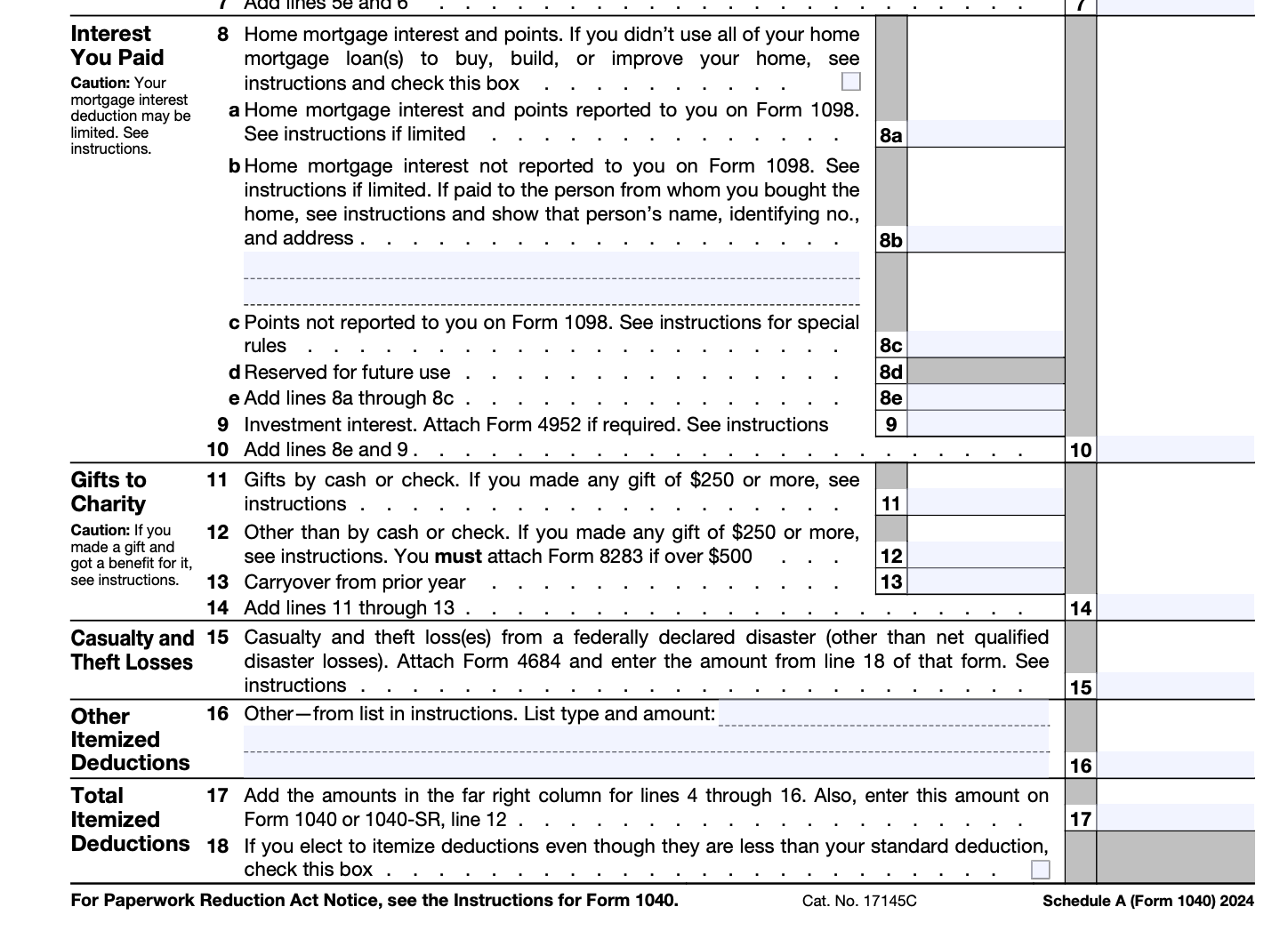
It’s important to note that, if you’re itemizing the deductions on Form 1040, the IRS allows you to include the property taxes you actually paid (up to $40,000 per household) using Schedule A. IRS Pub. 530 spells out clearly what qualifies (and what does not) when claiming property taxes, especially if you have partial exemption, tax exempt status, or personal property deductions.
Who Should Review or Reapply Each Year
Even if you love paperwork (who knows, someone might!) it’s easy to forget about your exemption status. However, your eligibility for property tax relief, total exemption, or special credits can, as mentioned earlier, change every year.
Be sure to check in on how your state handles exemptions and what their deadlines might be. Double-check your status if any of the following apply:
- You hit a new age milestone (namely, if you’re turning 65 and might qualify for a senior citizen exemption).
- Your disability rating or VA disability changes, especially for permanently disabled or totally disabled veterans and qualifying veterans.
- Your marital status changes, you remarry as an un remarried surviving spouse, or take on dependent children.
- You sell, refinance, or transfer your ownership interest in your principal residence or other property.
If you miss renewal, you could lose your partial exemption or property tax reduction, and your property tax bill will bounce back up.
Don’t Leave Savings on the Table
Property tax exemptions, property tax credits, and local relief programs put real money back in your account where it belongs. Whether you’re living in your principal residence, are a senior citizen, or have served in the military, these property tax reductions are worth the time it takes to apply.
Do your homework. Meet the deadlines. Check your eligibility for the next tax year. And remember: paying property taxes doesn't always mean you have to pay the full price.
💡 File your taxes with confidence. FileTax.com automatically applies property tax deductions, SALT credits, and renter relief programs when you file online.
Frequently Asked Questions
A tax exemption reduces your home’s assessed value, lowering your property tax. It doesn’t reduce your federal tax, but it does lower the property taxes you report on Schedule A (Form 1040).


