



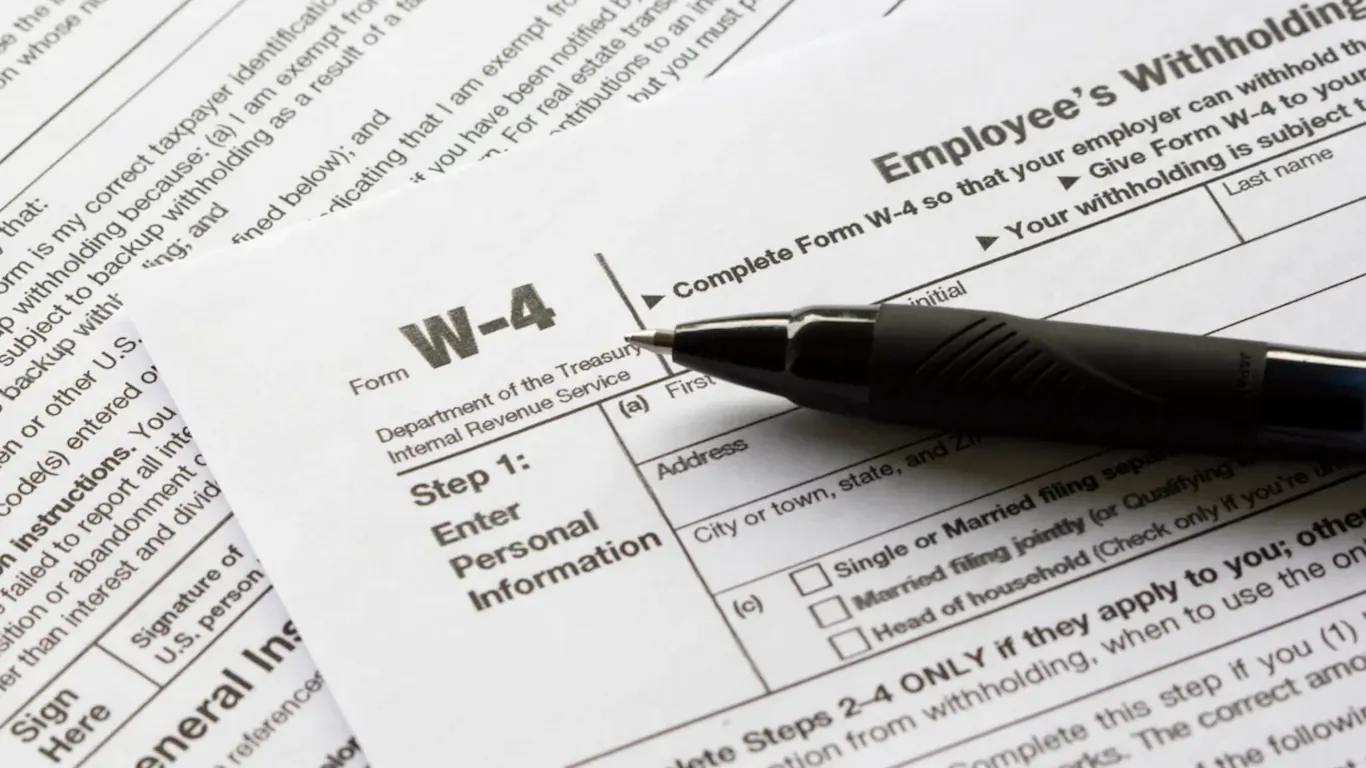
Forgot to Update Your W-4 After Divorce? Here’s What to Do
Fact Checked
FileTax.com content is reviewed for accuracy, timeliness, and completeness. It undergoes a structured editorial review process involving writers and expert reviewers.
More on our editorial standards Meet our editorial team Andrew WalshCPA, CFP CTFA & Tax Content Specialist
 Lea Uradu, JDTax Content Reviewer
Your Takeaways:
- Forgetting to update your W-4 after divorce can lead to under-withholding, surprise tax bills, and IRS penalties.
- Your filing status after divorce (Single, Head of Household, or Married Filing Separately) should be reflected on your W-4.
- Only the parent entitled to claim dependents should adjust withholding for the Child Tax Credit.
- Submitting a new W-4 is simple and is done through your employer—not the IRS.
- The IRS Tax Withholding Estimator helps confirm your paycheck is withholding the right amount.
If you forgot to change your W-4 after divorce, your paycheck may not reflect the correct withholding. The fix is simple: submit a new W-4 to your employer to make sure you’re on track—avoiding surprise bills or IRS penalties at tax time.
Divorce doesn’t just change your relationship—it changes how much tax your employer should withhold from your paycheck. If your W-4 still says “married” when you’re newly single (or head of household), your withholding could be completely off. That’s how surprise tax bills and IRS penalties sneak up on people.
Why Updating Your W-4 Matters After Divorce
When you were married, your Form W-4 probably reflected “married filing jointly.” Your tax filing status changes after divorce or legal separation, and so should your withholding.
Here’s what can happen if you keep your old W-4:
- You may owe a large tax bill if your employer withholds too little.
- You lose access to married filing jointly tax benefits and certain credits.
- Custody rules affect who can claim the child tax credit—and your W-4 should reflect that.
👉 Bottom line: not updating your W-4 after divorce is one of the most common divorce tax mistakes (see our mistakes guide).
Steps to Update Your W-4 After Divorce
Good news: fixing this is simple. Updating your W-4 ensures your paycheck reflects the correct amount of tax withholding after divorce, so you’re not hit with surprises at tax time.
Step 1: Choose your new filing status.
- Single: If you’re no longer married as of December 31.
- Head of Household (HOH): If you’re unmarried, pay more than half the cost of your home, and have a dependent child living with you.
- Married Filing Separately: Rare, but sometimes required if your divorce isn’t final by year-end.
Step 2: Account for dependents.
- Claim the child tax credit and credit for other dependents if you’re eligible.
- Custodial parents generally get the credits unless a divorce decree or Form 8332 says otherwise.
Step 3: Complete and submit Form W-4.
- Grab the latest IRS Form W-4.
- Give it to your employer (not the IRS).
Step 4: Double-check with the IRS Tax Withholding Estimator.
- Use the IRS estimator tool to make sure your paycheck withholds the correct amount.
- If withholding still doesn’t cover your liability, consider estimated tax payments.
Alimony, Child Support, and Property Transfers After Divorce
When you forgot to change your W-4 after divorce, your paycheck may not reflect the real tax consequences of your new situation. Beyond withholding, a divorce or separation agreement—including custody rules, alimony, and property transfers—can change your tax return in significant ways.
Alimony and Separate Maintenance Payments
The tax treatment of alimony depends on when your divorce or separation became final:
- Divorces finalized before 2019:
- Certain alimony and separate maintenance payments are considered alimony for federal tax purposes.
- The payer spouse pays and can deduct these payments.
- The receiving spouse must report them as taxable income.
- Divorces finalized after 2018:
- Alimony and separate maintenance are not deductible for the payer spouse and are not taxable to the receiving spouse.
- Separation instruments and written separation agreements control whether payments qualify. If not clearly identified as alimony, they may be treated as child support instead.
👉 Remember: Not all payments count as alimony. For example, payments tied to a separate maintenance decree that stop when a child reaches a certain age are treated as child support.
Child Support
- Child support is never deductible for the payer spouse and never taxable to the receiving spouse.
- It can still affect which parent claims dependents for certain tax credits like the Child Tax Credit.
- Your W-4 should reflect whether you or your ex-spouse can claim the child. A final decree or separation instrument often decides this.
Property Transfers and Divorce Settlements
When one taxpayer transfers property to a former spouse as part of a divorce settlement:
- Usually, there’s no recognized gain or loss at the time of transfer.
- The transfer is treated as moving the payer’s property to the receiving spouse without immediate tax liability.
- But the tax treatment changes later—if the asset is sold, only the remaining amount after basis adjustments may be taxable.
Installment payments tied to property settlements may also carry different rules depending on how the divorce or separation agreement is written.
Filing Status and Other Considerations
- Your tax year filing status depends on whether you were legally married on December 31. That determines if you file as married filing, single, or head of household.
- If you qualify as head of household, you may receive tax benefits like a higher standard deduction and access to certain tax credits.
- If you and your ex-spouse once filed a joint return, make sure your W-4 reflects your new reality to prevent under-withholding and unexpected tax liability.
Dependents and Custody Rules That Affect Your W-4
This is where many divorced parents get tripped up. Children affect both your filing status and withholding.
- Who claims dependents?
Usually, the custodial parent (the one the child lives with most) claims the child tax credit. A noncustodial parent can claim it if the custodial parent signs Form 8332. - Tie-breaker rules.
If both parents try to claim the child, the IRS uses tie-breaker rules (typically the custodial parent wins). If a child lives with both parents the same amount of time, the IRS usually allows the parent with the higher adjusted gross income (AGI) to claim the child. - Head of household status.
If you qualify as HOH, your withholding will be lower than the Single status.
👉 For more, see our Claiming Children After Divorce guide.
Filing Taxes Correctly After Divorce
When tax season rolls around, make sure your return reflects your new situation.
- Filing status: Check your marital status on December 31 of the tax year. That’s what decides if you file as single, HOH, or married filing separately status.
- Tax credits: Double-check eligibility for tax credits.
- Community property income payments: If you live in a community property state, your divorce decree may split income differently—update your return accordingly.
- Professional help: A tax professional can help you navigate tricky issues like property transfers, alimony, and dependency claims.
Smart Tax Planning Strategies After Divorce
Don’t just patch your W-4—plan ahead. Divorce is a fresh start financially, and tax planning keeps you from paying more than you need to.
- Use the IRS Tax Withholding Estimator every year. Your income and credits may change as kids grow up or support orders shift.
- Consider head of household status. If you qualify, it comes with bigger tax benefits than filing as single.
- Check your eligibility for certain credits. Some tax credits phase out based on income or dependents.
- Plan around alimony and settlements. Knowing how payments apply for federal tax purposes helps reduce surprises.
- Think long-term. Noncash property settlements may not be taxable now, but future gains will affect your tax return.
Common W-4 Mistakes to Avoid After Divorce
Here are some of the top errors divorced taxpayers make with W-4s:
- ❌ Forgetting to submit a new W-4 after a divorce.
- ❌ Claiming dependents you’re not entitled to.
- ❌ Misreporting alimony payments or separate maintenance amounts paid.
- ❌ Not updating your marital status with the Social Security Administration.
See our full list of Divorce Tax Mistakes for more pitfalls.
Final Word
Divorce reshapes your life, your finances, and yes—your taxes. If you forgot to change your W-4 after a divorce, don’t wait until tax season. Submitting a new W-4 and running the IRS Withholding Estimator today can save you from tax bills, penalties, and withholding headaches.
👉 Need help with any tax issues? Talk to a tax pro today!
FAQs: W-4 Changes After Divorce
Your employer will keep withholding taxes as if you’re still married, which can leave you under-withheld. That means a bigger bill—or penalties—when you file your tax return.


