



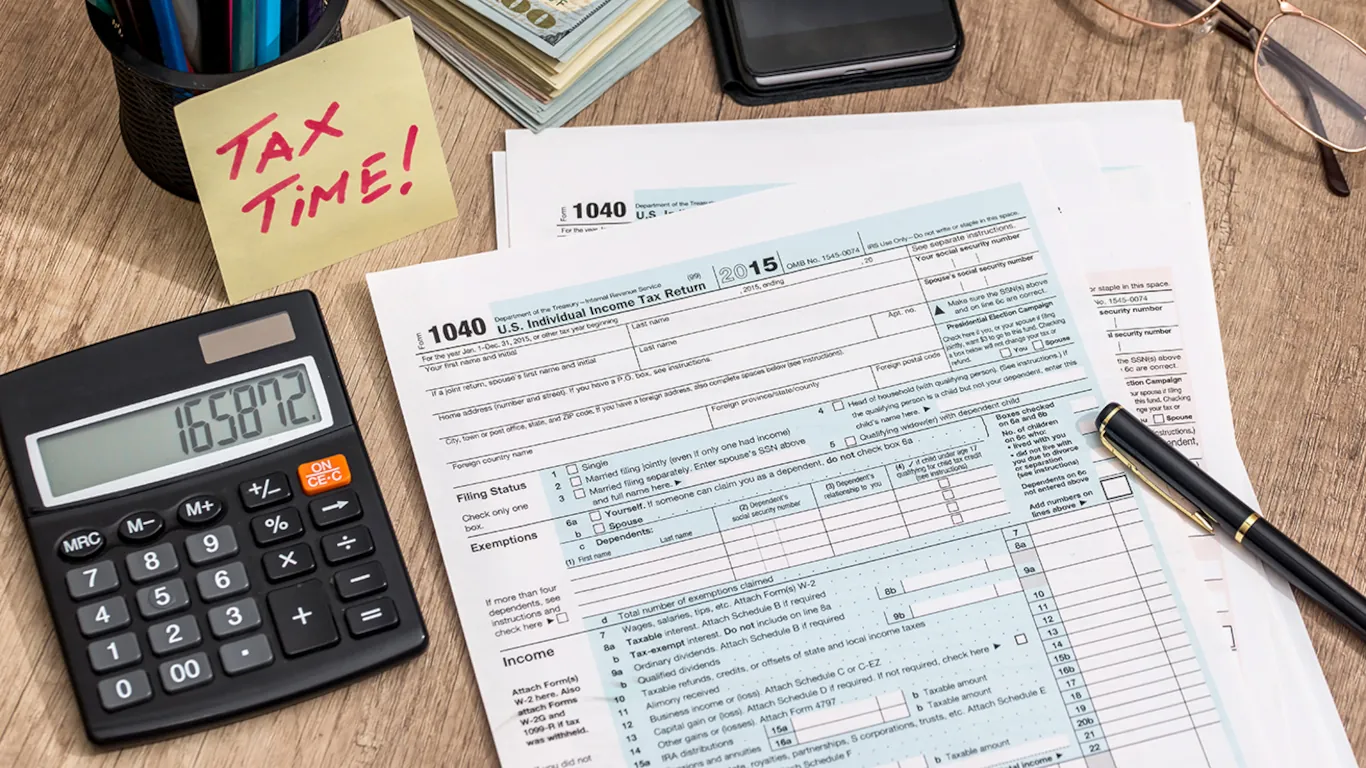
First-Time Filer Tax Checklist: Everything You Need Before You File
Fact Checked
FileTax.com content is reviewed for accuracy, timeliness, and completeness. It undergoes a structured editorial review process involving writers and expert reviewers.
More on our editorial standards Meet our editorial team Todd MonahanTax Content Specialist
 Lea Uradu, JDTax Content Reviewer
Your Takeaways:
- Having a complete checklist helps first-time filers avoid mistakes, delays, and IRS notices.
- Personal details like your SSN/ITIN, ID, and correct address are essential for filing and refunds.
- Gathering all income documents (W-2s, 1099s, freelance, investment, and benefits income) is critical.
- Even small or side income must be reported—the IRS receives copies of most forms.
- Tracking expenses early helps you claim eligible deductions and credits.
Filing taxes for the first time? Don’t panic—you’ve got everything you need right here. This first-time filer checklist will walk you through every document, record, and form you need before filing your taxes.
Whether you’re a student, a new employee, or self-employed for the first time, having everything ready can save you stress and help you claim every credit you deserve. Follow this step-by-step first-time filer tax checklist to avoid mistakes and file your return smoothly.
What Is a First-Time Filer Tax Checklist (and Why It Matters)?
Think of your tax checklist as your cheat sheet for adulting. Every year, millions of new taxpayers file late—or not at all—because they forget something simple like a missing W-2 or an unreported 1099. The IRS isn’t forgiving when forms or details are missing.
A solid checklist helps you:
- File your taxes accurately and on time.
- Avoid IRS delays and penalties.
- Claim only deductions and credits you’re eligible for under current IRS rules. (Source: IRS Publication 501)
Step 1: Gather Your Personal Documents
Before gathering income forms or deductions, start with the basics — your personal information.
These documents verify your identity, confirm your eligibility to file, and ensure your tax refund lands safely in your account.
This step helps first-time filers prevent the most common e-file errors and refund delays.
💡 Pro Tip: Use FileTax.com's downloadable PDF checklist to track each document as you go.
Social Security Number (SSN) or Tax ID Number (ITIN)
Your Social Security number or Individual Taxpayer Identification Number (ITIN) is the foundation of your tax return.
It’s how the IRS matches your income and applies your credits or refund.
Double-check that the digits on your card are correct — even a small typo can delay your return for weeks.
If you changed your name recently, make sure it matches Social Security records to avoid e-file rejections.
Valid Photo ID
You must prove your identity when filing online or with a tax preparer.
Acceptable IDs include a driver’s license, state ID, passport, or military ID.
A valid ID protects against identity theft and confirms your personal information for secure e-filing.
Proof of Address
Confirm that your current address appears on all tax forms and employer records.
If you moved, you can notify the IRS by submitting Form 8822, Change of Address, or updating your address on your next tax return.
Filing Status Documents
Your filing status determines your tax rate and eligibility for certain credits.
Keep the following documents on hand:
- Marriage or divorce certificates — to confirm your correct filing status (single, married filing jointly, or head of household).
- Birth certificates or custody documents — if you plan to claim dependents.
🧾 Tip: If both parents might claim the same child, ensure you have proof of residency or custody paperwork ready.
Prior-Year Tax Information (If Any)
Even if you’re a first-time filer, you may have a prior record if you filed as a dependent.
If you e-filed previously, keep your Adjusted Gross Income (AGI) and self-select PIN — they help verify your identity when filing.
If you’ve never filed before, enter “0” in those fields.
Bank Account and Routing Number
Direct deposit is typically the fastest refund method. Most filers who e-file and choose direct deposit receive refunds within about 21 days, but some may take longer.
Verify your bank account and routing number from a recent check or statement to avoid errors.
If you don’t have an account, consider a prepaid debit card that accepts direct deposits.
Never use someone else’s account for your refund — the IRS flags mismatched names.
Dependents and Family Records
If you plan to claim dependents, gather:
- Social Security numbers and birth dates for each child or dependent.
- Proof of residency (school, daycare, or medical records).
- Childcare provider’s tax ID number and payment receipts are required for the Child Tax Credit or Dependent Care Credit.
Keep these in a clearly labeled folder (“Dependents”) so they’re easy to update next year.
Employment and Education Information
If you’re a student or recently employed, have these ready:
- Student ID and Form 1098-T from your school to report tuition and qualified education expenses.
- Employer details — company name, address, and EIN — to verify your W-2 forms.
Keeping your school and employer information accurate helps ensure smooth cross-matching with IRS records.
Related Topic: Students & Forms
Emergency and Support Records
Life events like natural disasters, unemployment, or shared custody can affect your tax return.
Keep copies of:
- Any disaster relief or FEMA assistance letters. The IRS may use these to verify eligibility for disaster-related tax relief.
- Unemployment income forms (Form 1099-G)
- Support or custody agreements with a noncustodial parent
These documents help confirm eligibility for deductions, credits, or casualty-loss claims.
Organization Hack
Create three folders (digital or physical) to simplify your prep:
Folder | What to Include | Why It Matters |
|---|---|---|
Identity & Dependents | SSNs, IDs, birth certificates, custody docs | Verifies filing eligibility |
Bank & Refund Info | Account numbers, prior AGI, direct deposit details | Prevents refund delays |
Life Changes & Proof | Marriage/divorce docs, address forms, childcare receipts | Supports deductions and credits |
When it’s time to file your taxes, everything you need will be right at your fingertips.
Step 2: Collect All Income Records
Now that your personal documents are ready, it’s time to gather proof of how you earned your money last year.
This is where first-time filers often get tripped up — forgetting a 1099, overlooking rental income, or skipping investment forms. The IRS expects you to report all income, even small side hustles or interest from your savings account.
Collecting every form and income record now will make filing your taxes smoother, faster, and more accurate.
Employment and Freelance Income
Start with the income most people recognize — wages and freelance work.
- W-2 forms from every job you held during the year.
- 1099-NEC or 1099-MISC forms for gig work, freelance projects, or side hustles (think DoorDash, Upwork, or Etsy).
- Self-employment income records — invoices, receipts, or digital payment reports (PayPal, Venmo Business, etc.).
- Unemployment income, Social Security benefits, or other government payments.
- Credit card statements or bank deposits that verify income amounts.
💡 Pro Tip: You must report all income, even if you don’t receive a Form 1099. Payers are required to issue a 1099-NEC only if they pay $600 or more, but the IRS expects you to report all taxable income regardless of amount.
Source: IRS Form 1099-NEC Instructions
Rental Income and Property Records
Do you rent out a room, apartment, or home — even part-time through Airbnb or Vrbo? That counts as rental income in the eyes of the IRS.
Keep detailed rental income records and related expenses, rental asset information, such as:
- Rent receipts, bank statements, or lease agreements showing what tenants paid.
- Expense records for property maintenance, repairs, cleaning, and clean up costs.
- Depreciation record for furniture or property assets used to generate income.
- Real estate taxes, property tax receipts, and insurance premiums for deductible expenses.
- Utilities or service bills if you share costs with tenants.
Organizing rental records ensures that you can support both your income and any deductions when you file your taxes using Schedule E.
🏡 Smart Tip: Even if your rental activity feels “casual,” the IRS still considers it taxable. Keep everything in one folder labeled Rental Income & Expenses.
Investment and Savings Records
If you invest or have interest-bearing accounts, your investment record is a must-have.
These documents show your dividends, interest, capital gains, or other savings throughout the year.
Collect the following:
- Form 1099-DIV – for dividends from stocks or mutual funds.
- Form 1099-INT – for interest from savings or bonds.
- Form 1099-B – for proceeds from stock or crypto sales.
- Brokerage statements or online investment record downloads.
- Other savings forms from financial apps that issue rewards or cashback bonuses.
Keeping a clear record of your investments helps you verify amounts, calculate gains or losses, and ensure accuracy when you file your taxes.
💡 Tip: Some apps don’t mail 1099s unless you earn over $10 in dividends or $600 from rewards — but you still have to report that income. Double-check your credit card statements or bank account deposits for small amounts you might otherwise miss.
Retirement, Benefits, and Other Income
Income isn’t always from work — it can also come from savings or benefits.
Gather these documents as well:
- Social Security benefits statements (SSA-1099).
- Pension or retirement distributions (Form 1099-R).
- Traditional IRA basis or retirement contributions documentation.
- FEMA assistance information if you received disaster relief payments.
- Provider’s tax ID number for any benefits paid through an institution.
If you have self-employment income, you may also need your record of estimated tax payments and wage withholding details to confirm how much you’ve already paid toward your annual tax bill.
You also need to consider prior-year state refund amounts if you received a refund while filing a return as a dependent on someone else's return.
Organization Tip from FileTax.com
Group your records into simple categories:
- Employment & Freelance Income
- Investments & Savings
- Rental & Property Income
- Retirement & Benefits
Label each folder (digital or paper) and store them securely. This makes it easy to verify amounts, locate tax documents, and breeze through your tax appointment or e-file process.
✅ Remember: The IRS receives copies of all your W-2s, 1099s, and investment forms. If you miss one, they’ll know — so make sure your income and expenses match across your forms before you file.

Step 3: Track Your Expenses and Deductions
This is where staying organized pays off. Every expense you track now could reduce your taxable income later. Here’s what to keep:
Medical & Health-Related Records
- Medical expenses, insurance premiums, and Health Savings Account contributions and distributions (Forms 5498-SA and 1099-SA).
- Health insurance forms (Form 1095-A/B/C) if applicable.
- Keep receipts for out-of-pocket expenses like copays, prescriptions, and medical mileage.
Charitable Organizations Records
- Cash donations made to qualified charitable organizations.
- Donation receipts and bank statements as proof.
- Records for non-cash charitable donations (like clothing or furniture).
- Mileage and transportation costs related to volunteer work.
Home and Property
- Mortgage interest statements (Form 1098).
- Real estate and property tax records.
- Clean up costs, repairs, and home improvement expenses.
- FEMA assistance information or property losses documentation, if applicable.
Education & Retirement
- 1098-T forms and receipts for tuition or qualified educational expenses.
- Student loan interest statements (Form 1098-E).
- IRA contributions or traditional IRA basis records.
- Retirement contributions to 401(k)s or other savings plans.
- 1099-Q forms related to any withdrawals from 529 college savings plans, also known as Qualified Tuition Programs (QTP). Distributions are tax-free for school-related costs but not for other expenses.
Self-Employment & Business
- Business income and expenses, including supplies, equipment, or travel.
- Depreciation records, expense records, and records showing income.
- Tax ID number of any service providers or subcontractors you’ve paid.
Keeping all these together helps you decide whether to itemize deductions or take the standard deduction.
Step 4: Check Credits and Adjustments You Might Qualify For
Don’t leave money on the table. Credits directly reduce what you owe—sometimes even giving you a refund. These require proper documentation, like childcare receipts, tuition statements, or proof of income.
You might qualify for:
- Earned Income Tax Credit (EITC) if your earned income and adjusted gross income fall below IRS limits for your filing status and number of qualifying children.
- Child Tax Credit, especially if you’re a custodial or noncustodial parent.
- Education Credits, like the American Opportunity or Lifetime Learning Credit.
- Retirement savings credits for IRA or 401(k) contributions.
- Estimated tax payments or a record of estimated tax if you’re self-employed.
🔍 Check IRS Publication 501 for eligibility rules and filing thresholds.
Step 5: Review Local and State Taxes
Don’t forget your state and local taxes—they can impact your total refund or balance due. You may also need to file state and local taxes, depending on where you live and work.
Keep:
- Local and state tax returns or property tax receipts.
- Sales tax records and check registers if you itemize.
- Local tax payment confirmations or refund statements.
- Records of real estate taxes and rental income/expenses for deductions.
If you moved states or worked remotely, verify each state’s filing requirement—some require you to file even for short-term work.
Step 6: Get Ready to File
You’ve gathered all your tax documents, verified applicable records, and tracked your income and expenses—nice work. Now it’s time to file your taxes.
Here’s your quick pre-filing checklist:
- Review withholding on your W-2s.
- Verify bank account info for direct deposit.
- Choose your filing status (single, married filing jointly, etc.).
- Review for accuracy—social security number, ITIN, and spelling matter!
- Save digital copies of your return and receipts in a secure folder.
And remember—FileTax.com makes it easy to file taxes confidently without the jargon.
📎 Need help choosing a method? Check out our Free Filing Options page.
Final Step: Download & Print Your Checklist
Ready to get organized?
📥 Download & Print the FileTax.com First-Time Filer Checklist (PDF) to ensure you don’t miss a single form this tax season. Don't forget to save it for next year's filing.
With this first-time filer checklist, you’ll file your taxes confidently, maximize your deductions, and avoid costly mistakes—because filing your first return should feel smart, not stressful.
Frequently Asked Questions
You’ll need W-2s, 1099s, Social Security numbers, bank account info, and proof of deductible expenses like medical or education costs.


