




SALT Deduction Updates for 2025 and 2026
Fact Checked
FileTax.com content is reviewed for accuracy, timeliness, and completeness. It undergoes a structured editorial review process involving writers and expert reviewers.
More on our editorial standards Meet our editorial team Todd MonahanTax Content Specialist
 Lea Uradu, JDTax Content Reviewer
Your Takeaways:
- The SALT deduction cap increased to $40,000 for 2025–2029.
- Married filing separately is capped at $20,000.
- The deduction phases out above $500,000 MAGI.
- At $600,000 MAGI, the cap drops back to $10,000.
- SALT deductions only apply if you itemize.
Thanks to recent tax law changes, the state and local tax (SALT) deduction cap is now $40,000 per return (single or joint filers), or $20,000 if you’re married filing separately. However, the full deduction phases out as your income goes above $500,000 ($250,000 MFS), and totally reverts to $10,000 at $600,000 Modified Adjusted Gross Income. The new limit is in effect through 2029, after which the cap drops back to $10,000.
Let’s be honest: nobody opens their property tax bill and jumps for joy. But for a long time, writing off those painful state and local taxes on your federal return was a nice consolation prize. It took a bit of the sting out of living in a place with great schools or nice roads, but high taxes.
All that changed with the Tax Cuts and Jobs Act (TCJA), when Congress dropped a hard SALT cap on what you could write off.
Now, there’s another SALT deduction update to be aware of: the maximum SALT deduction cap of $10,000 expired at the end of tax year 2024. For tax years beginning in 2025 and stretching through 2029, Congress raised the deduction limit and made some major changes to SALT tax deduction policy.
Whether you’re a homeowner facing the burden of high local taxes, a married couple pondering filing status decisions, or a high-income taxpayer getting closer to the new cap, this guide is your primer on state and local tax deduction changes.
Definition: The SALT deduction is an itemized deduction for state and local taxes paid to state and local governments, including income tax, sales taxes, and property taxes. Under the new law, the deduction cap is $40,000 per return (single or married filing jointly) and $20,000 for married couples filing separately, effective for tax years beginning in 2025 through 2029. |
|---|
What Is the SALT Deduction?
The SALT deduction lets you lower your federally taxable income by subtracting the amount of certain state and local taxes you paid during the year, including property taxes, local income taxes, and, if you elect, sales taxes.
The deduction is only available if you opt for itemized deductions on your federal return instead of the standard deduction. All these local taxes directly impact your federal taxable income and your overall tax liability.
But as is typically the case at tax time, there’s a twist: the deduction phases out as your modified adjusted gross income rises about $500,000 for singles and joint filers (or $250,000 for those married filing separately). At $600,000 ($300,000 if you’re married filing separately), you’re back to a SALT cap of $10,000 ($5,000 married filing separately). These income thresholds increase by 1% every year.
This new deduction limit is important for tax filers to note, particularly those in high tax states. If you’re thinking about whether to itemize versus taking the standard deduction, or how your property tax and state income taxes fit into your strategy, you’ll want to consider this detail.
When the Congressional Budget Office crunched the numbers, itemized deductions dropped from 31% to just 9% of returns after the old cap and higher standard deduction were introduced. With this latest increase, more high-income taxpayers may revisit itemization to maximize their federal tax benefit.
Example: You're a single New York resident with $17,000 in property taxes and $14,000 in state income taxes paid, totaling $31,000 in local taxes paid. Under the previous deduction limit, only $10,000 counted. Now, with the SALT deduction update, you can write off the full $31,000 (unless your MAGI jumps above the phaseout thresholds). |
|---|
Still curious about the nuts and bolts of your property tax? Be sure to check out our guide to property taxes for more.
Why the SALT Cap Exists
You might be wondering: why put a lid on SALT in the first place?
The deduction cap originally hit as part of the Tax Cuts and Jobs Act (TCJA), with the goal of offsetting cuts elsewhere and leveling out federal tax liabilities between low and high tax states. Supporters argued that high local tax SALT deductions let wealthy residents in high-tax states trim their federal tax bill too much, shifting the burden onto states with lower local taxes.
With the July 2025 “Big Beautiful Bill Act”, the deduction cap rises to $40,000, but only for tax years 2025 through 2029. After that, barring the passage of a new law, we’re back to a $10,000 cap.
However, it’s important to keep in mind that income tax benefits above $500,000 ($250,000 for married filing separately) in a MAGI start to phase out, which means high earners should talk to a tax advisor or accounting advisor sooner rather than later.
How the SALT Limit Affects Taxpayers
While the SALT limit technically affects everyone, some taxpayers are more impacted than others, namely:
- Homeowners in High-Tax States: These are folks paying hefty local taxes and local income taxes (think CA, NJ, NY, CT, or IL) where property taxes alone might have eaten up the whole deduction cap. With $40,000 now available, there’s serious room for a greater net benefit.
- High Income Taxpayers: For singles or married couples filing jointly with MAGI over $500,000, and especially those whose AGI approaches $600,000, the local tax salt deduction begins to shrink. At $600,000 single/$300,000 married filing single, you’re capped again at $10,000 ($5,000 married filing single.
- Married Couples Filing Separately: The new cap is $20,000 per return, phasing out above $250,000 in income, with a floor of $5,000 at $300,000.
- Pass Through Entities: Business owners who navigate entity-level taxes, S corporations, or PTET election may sidestep the cap, since entity-level state taxes can often be deducted above the limit.
Here’s a comparison chart to break down the differences before and after the cap:
Scenario | Old SALT Cap (2018-2024) | New SALT Cap (2025-2029) |
|---|---|---|
Single, NY, $250k income, high property and income tax | $10,000 capped | Up to $40,000 (subject to phaseout) |
Married Filing Jointly, $400k income | $10,000 capped | Up to $40,000 if under threshold |
Married Filing Separately, $300k income | $5,000 capped | Up to $20,000 (phased out at $300k) |
High earners (MAGI $600,000 single) | $10,000 capped | $10,000 capped (phaseout hits) |
If you’re close to the deduction limit or phase-out, it pays to double-check your taxable income with your tax advisor, as the right approach could tip your federal tax position and net federal tax benefit.
The IRS has also noted that, starting in 2026, people in the 37% federal tax bracket will only see a maximum of 35% benefit from each dollar itemized, so high-income filers may want to consider alternate strategies to reduce federal taxable income and tax liability.
2025 and 2026 Legislative Proposals
Here’s what the current law spells out, and what could potentially come next:
- $40,000 SALT cap (or $20,000 for married filing separately) through tax year 2029 for state and local tax deduction.
- The deduction cap phases out for federal tax filers at $500,000 MAGI and drops back to $10,000 at $600,000, with thresholds rising 1% annually.
- For seniors 65+ between tax years 2025–2028, there's a special $6,000 bump in your standard or itemized deductions, phased out above $75,000 single/$150,000 married filing jointly.
- State-level workarounds remain in play for PTET income and individual PTE owners.
If you want to stay abreast of the latest updates, be sure to check out the IRS Newsroom for more.
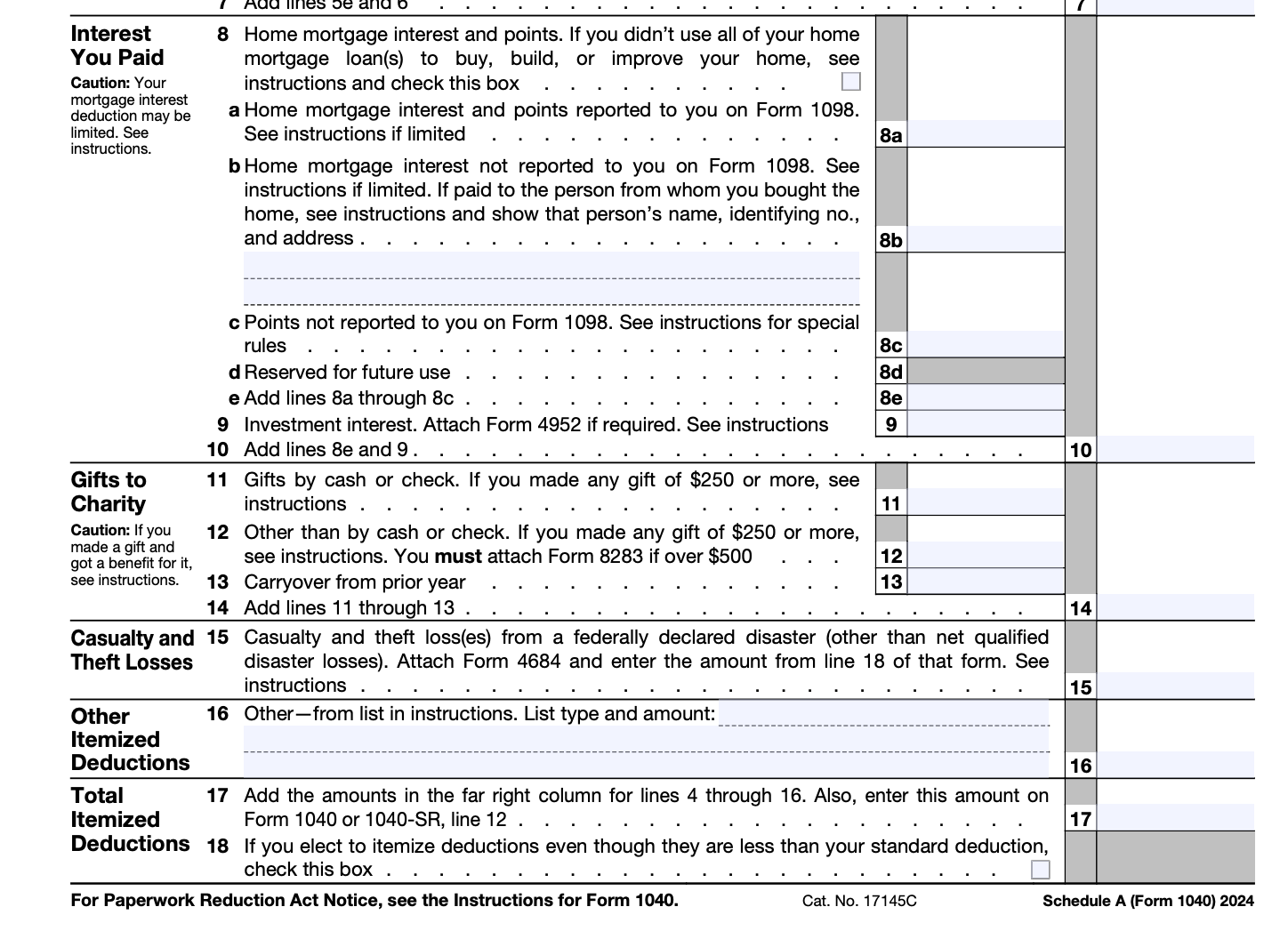
Now that you know the laws and caps, how do you make sure you’re maximizing your federal tax benefits as a homeowner? Some tips:
- Track All Taxes Paid: Keep records for state income taxes, sales taxes, property taxes, and local taxes directly remitted to state and local governments. Without solid numbers, you can’t strategize your SALT cap workarounds.
- Standard Deduction or Itemize?: Run both calculations on Schedule A. With high local tax salt deduction, itemizing may deliver bigger tax savings, but always check against the new standard deduction amounts. FileTax.com can help you decide which option makes sense for you.
- Watch Income Thresholds: As your adjusted gross income rises, your federal tax benefit from SALT deduction may decrease, especially if you creep into phase-out territory. Adjust your payment timing or explore PTET and S corporation options where feasible.
- Plan Ahead for Deduction Limits: Bunching property tax payments or timing local tax salt deduction strategies could lock in federal tax benefits before thresholds move.
- Talk to an Expert: Tax advisors who are up to date on the latest house bill shifts, Treasury Department guidance, and local government rules can help you land the best federal tax position.
Outsmart the SALT Cap: Maximizing Your State and Local Tax Deduction
Don’t let a number on Capitol Hill decide how much you keep in your pocket. With the higher SALT deduction cap in play, you’ve got a fresh shot at bigger tax savings, as long as you play your cards right. Whether you’re leveraging hefty local taxes, property taxes, or creative workarounds like S corporations and pass-through entities, knowing the latest SALT deduction update puts you back in control.
Stay savvy. Your next move could mean a seriously lower federal tax bill, more money in your pocket, and a lot less tax season stress. Make the SALT cap work for you, not against you. Let FileTax.com help.
Frequently Asked Questions
It’s $40,000 per return for singles and married couples filing jointly, or $20,000 for married couples filing separately. The deduction starts phasing out above $500,000 ($250,000 MFS) in adjusted gross income, and hits a floor of $10,000 ($5,000 MFS) at $600,000 ($300,000 MFS).


