




How to File a Massachusetts Tax Extension: The Complete Guide
Fact Checked
FileTax.com content is reviewed for accuracy, timeliness, and completeness. It undergoes a structured editorial review process involving writers and expert reviewers.
More on our editorial standards Meet our editorial team Kevin MarshallTax Content Specialist
 Lea Uradu, JDTax Content Reviewer
Your Takeaways:
- Massachusetts taxpayers can file for a 6-month extension.
- You must pay at least 80% of your total tax liability by April 15 to avoid penalties.
- The extension only delays filing, not payment.
Need more time to file your Massachusetts income tax return?
A tax extension can give you that breathing room.
While it allows you to extend the filing deadline, remember that any taxes owed are still due by the original date.
Keep reading to understand how to file a Massachusetts tax extension.
Overview of Massachusetts Tax Extension Requirements
What is a Massachusetts Tax Extension?
An extension provides additional time for taxpayers to file their return, but does not extend the time to pay any taxes owed. Massachusetts residents must still pay at least 80% of their total tax liability by the original deadline to avoid penalties.
Example: If you owe $10,000 in total taxes, you must pay at least $8,000 by April 15th. Any remaining balance can be paid when you file your tax return later.
Important Massachusetts Deadlines
The original deadline for filing your Massachusetts taxes is April 15, the same as the federal filing deadline. Massachusetts generally grants an automatic six-month extension to file, moving the deadline to October 15, as long as at least 80% of your total tax liability is paid by the original due date.
You generally do not need to file Form M-4868 to obtain the extension. However, you may use Form M-4868 to make an extension payment if you expect to owe additional Massachusetts income tax.
For fiscal year filers, the deadline is the 15th day of the fourth month after the end of the tax year.
Do I Need to File a Separate Extension if I Filed for a Federal Extension?
No. Filing a federal extension using IRS Form 4868 does not determine whether you receive a Massachusetts filing extension. Massachusetts generally grants an automatic six-month extension if you have paid at least 80% of your total Massachusetts tax liability by the original filing deadline.
If you need to make a payment to meet the 80% threshold, you can use Form M-4868 to make the Massachusetts extension payment. You do not need to file Form M-4868 simply to receive the automatic filing extension.

How to Get a Massachusetts Tax Extension
Massachusetts generally grants an automatic six-month extension to file your state income tax return if you have paid at least 80% of your total tax liability by the original filing deadline.
To qualify for the extension:
- Calculate your tax liability: Determine your total Massachusetts tax liability for the year.
- Pay at least 80% by the original deadline: Your payments can include Massachusetts income tax withheld from your paychecks, estimated tax payments, or other payments made toward your tax liability. For example, if your total tax liability is $15,000, you must have paid at least $12,000 by the original filing deadline.
- Make an extension payment if needed: If you have not yet paid enough to meet the 80% threshold, make an additional payment by the original filing deadline through MassTaxConnect or another approved payment method.
- File your Massachusetts tax return by the extended deadline: If you meet the payment requirement, you generally have six additional months to file your return.
- Keep your payment records: Save confirmation of any extension payment and your other tax payment records for your files.
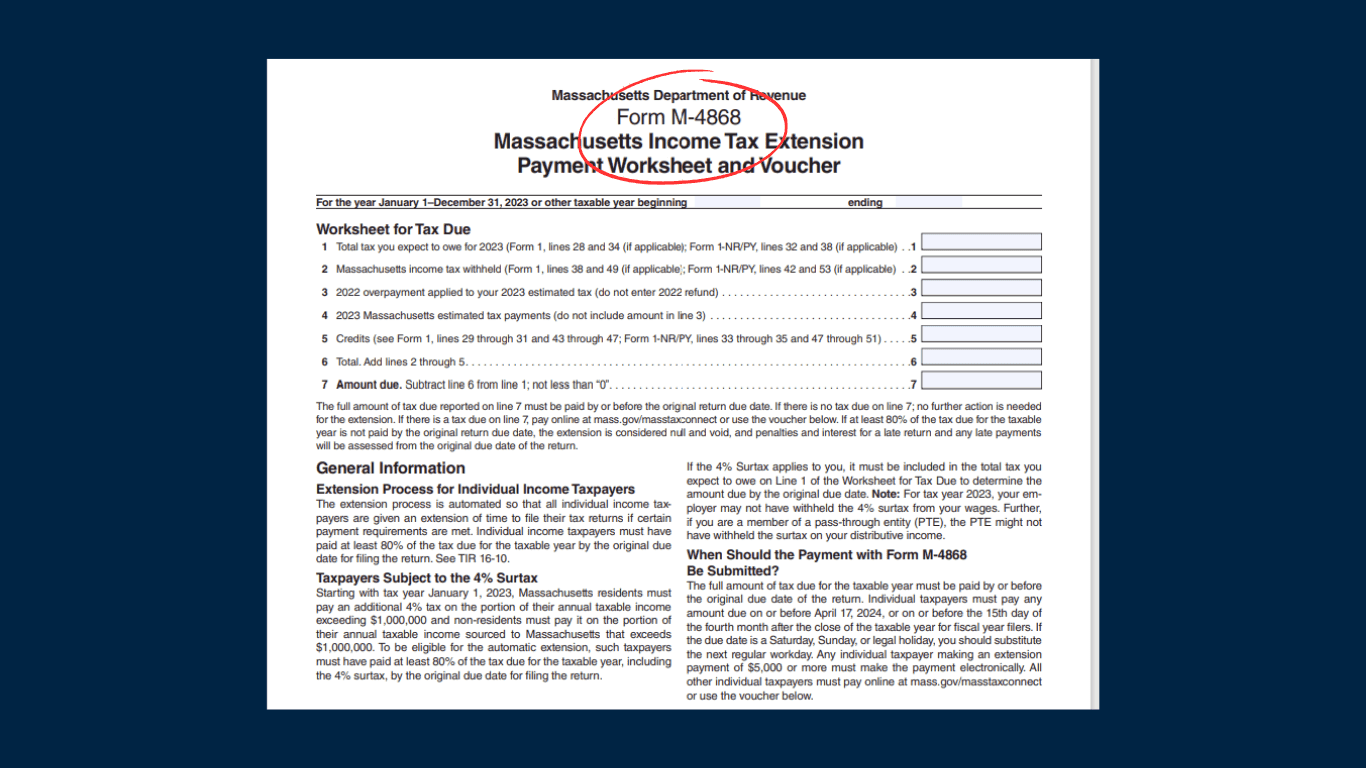
Example of Payment Calculation
If you owe $20,000 in taxes for the year and have already paid $15,000 through withholding and estimated payments, you have already paid 75% of your tax liability. You would need to pay an additional $1,000 by the original deadline to reach the 80% threshold and qualify for the automatic filing extension.
FAQs on Massachusetts Tax Returns and Extensions
Do I Need to Pay My Massachusetts Income Tax When Filing an Extension?
Yes, you must pay at least 80% of your estimated tax liability by the original due date to avoid penalties. Failure to pay this amount will void your extension and result in penalties and interest on any unpaid taxes.
Who is Eligible for a Massachusetts Tax Extension?
Massachusetts generally grants an automatic six-month filing extension to taxpayers who have paid at least 80% of their total tax liability by the original filing deadline. The extension gives you additional time to file your return, but any remaining tax is still due by the original deadline.
What Are the Penalties for Late Filing and Late Payment?
Late filing in Massachusetts incurs a penalty of 1% per month (up to 25%) of the tax due. Interest on late payments is charged at 4% above the federal short-term rate, simple interest.
What Is the Additional 4% Surtax for High Incomes?
Starting in 2023, Massachusetts applies a 4% surtax on income over $1,000,000. When filing for an extension, this surtax must be included in the estimated tax payment.
What is Massachusetts PTE Excise?
Certain businesses are structured as pass-through entities, such as S corporations, partnerships, and LLCs. In these business types, the income "passes through" to the owners or partners, who then report it on their individual income tax returns.
Still have questions? Our experts can walk you through your unique situation — get started with your federal extension now.
Massachusetts Tax Revenue Report Overview:
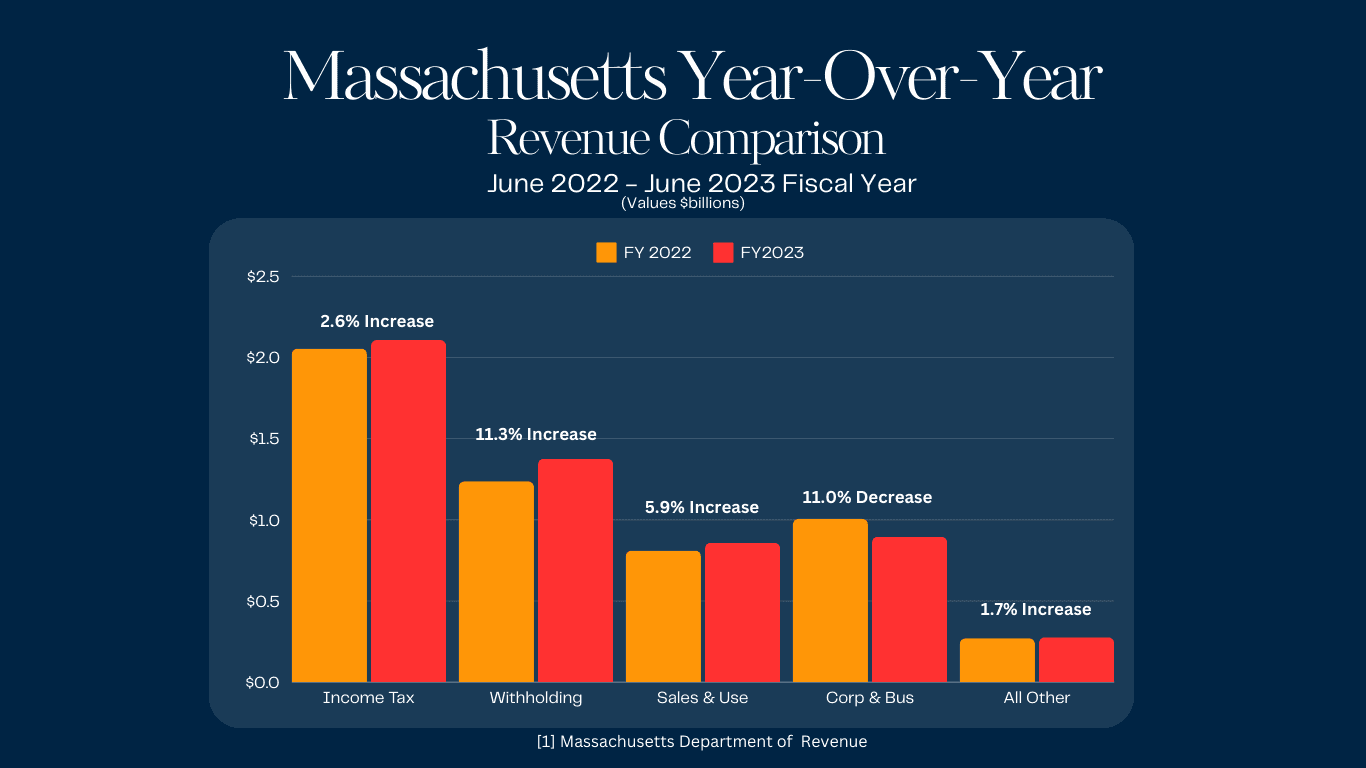
Year-over-Year Revenue Comparison (June 2022 vs. June 2023)
A look at Massachusetts tax collections from June 2022 to June 2023 shows mixed performance across key categories. The bar chart highlights the following trends:
- Income tax collections rose by 2.6%.
- Withholding tax collections saw an impressive 11.3% increase.
- On the downside, corporate and business tax collections fell by 11%.
This mixed performance suggests that while most tax categories experienced growth, corporate taxes saw a notable decline, which may impact overall state revenue trends.
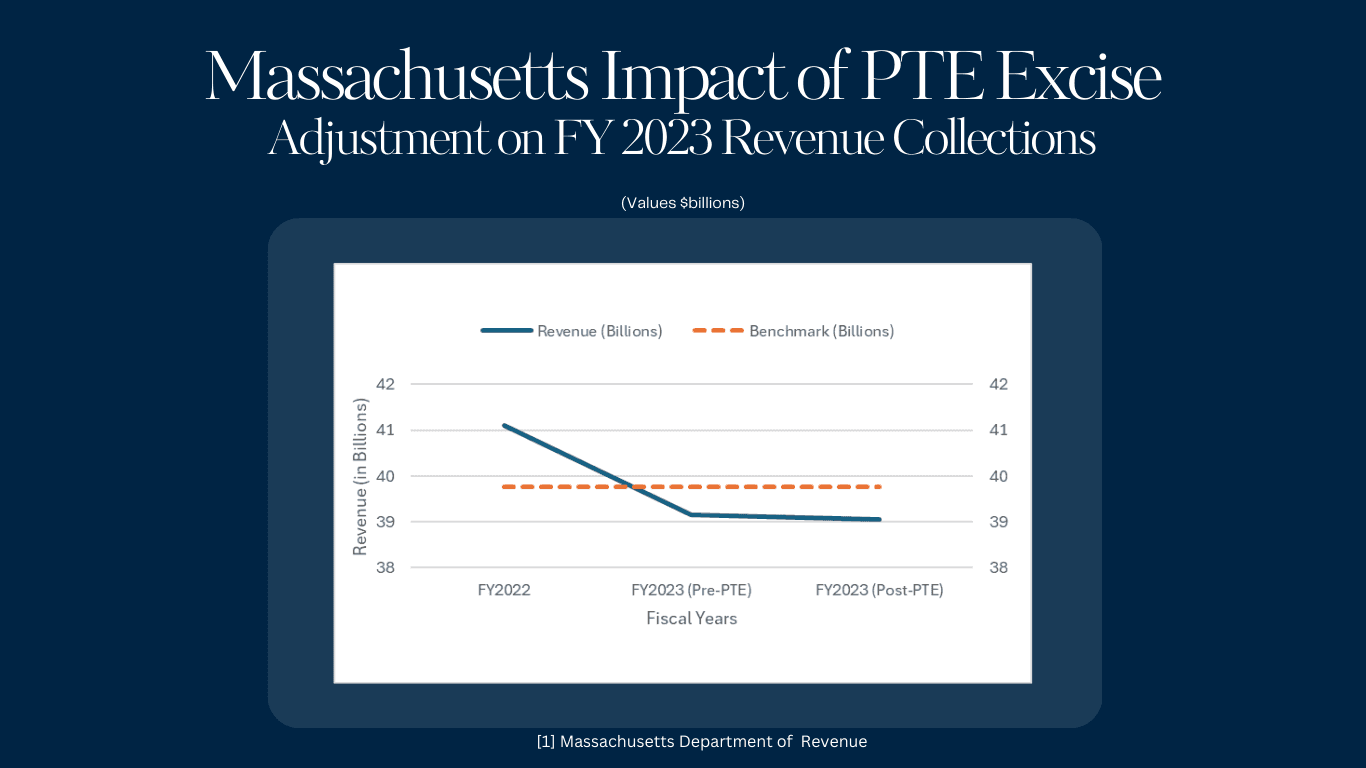
Impact of PTE Excise Adjustment on FY2023 Revenue Collections
The PTE excise adjustment had a significant impact on Massachusetts’ fiscal year 2023 revenue collections. The line chart compares FY2023 revenue before and after this adjustment with FY2022 totals:
- FY2023 collections are 0.3% lower than FY2022 when adjusting for the PTE excise.
- Revenue remains 0.8% below the FY2023 benchmark.
This illustrates the crucial role of the PTE excise in overall tax collections, showing how adjustments influence state revenue reporting and comparisons between fiscal years.
Conclusion
A Massachusetts tax extension gives you additional time to file your return, but it does not extend the deadline for paying your tax liability. To qualify for the automatic six-month extension, make sure you have paid at least 80% of your total tax liability by the original deadline. Keep records of your payments and any confirmation for additional payments you make.
Work with Our Experts!
While state tax extensions can be straightforward, federal tax filings can be complex. Our team of experts is here to guide you through the process.


