


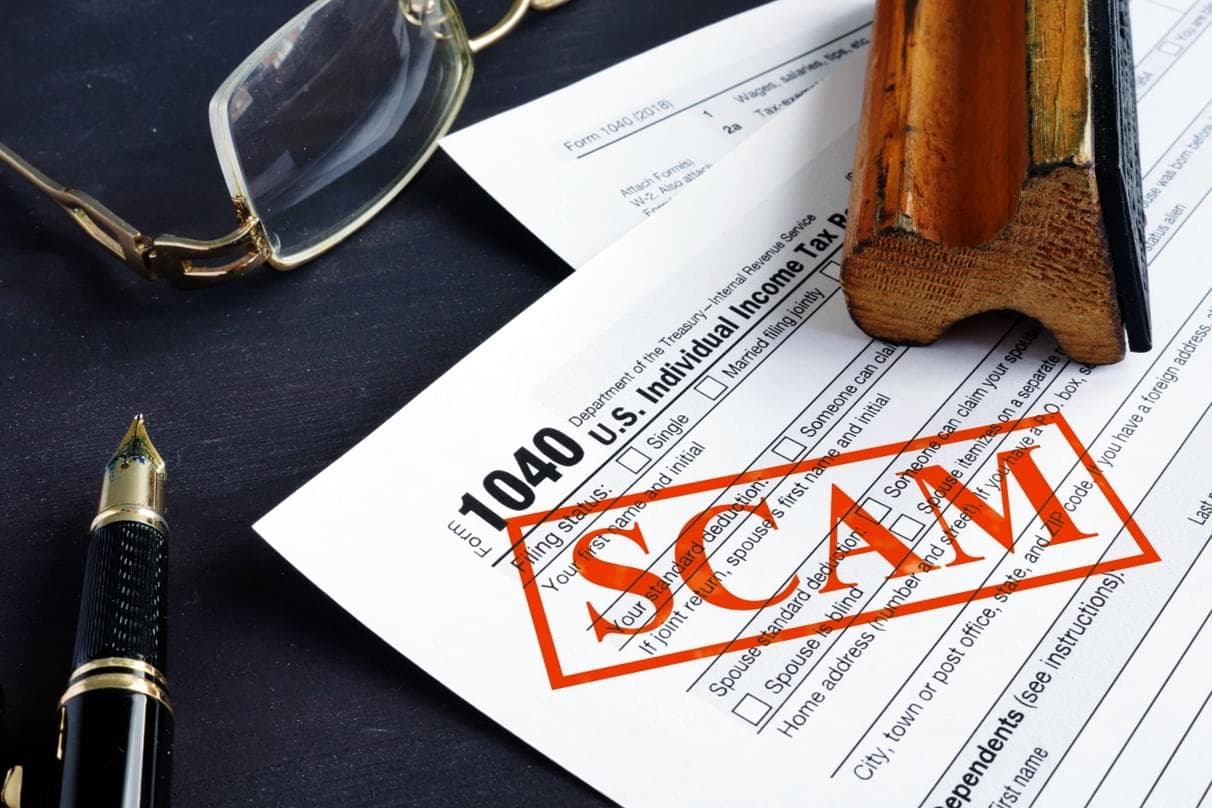
Tax Scams to Watch for in 2026: How to Protect Yourself
Learn how to recognize and defend yourself against potential tax scams.
Fact Checked
FileTax.com content is reviewed for accuracy, timeliness, and completeness. It undergoes a structured editorial review process involving writers and expert reviewers.
More on our editorial standards Meet our editorial team Mitchell NelsonCPA & Tax Content Specialist
 Lea Uradu, JDTax Content Reviewer
Your Takeaways:
- How does the IRS actually contact taxpayers? By regular mail first, not unexpected emails, texts, social media messages, or phone calls.
- What are the current tax scams to watch for in 2026? The IRS's 2026 Dirty Dozen lists 12, from IRS impersonation and phishing to ghost preparers and identity theft. Full breakdown below.
- What should I do with a suspicious message? Don't click, don't share personal or financial information, and don't send money. Verify independently through IRS.gov.
- How do I report a tax scam? It depends on how it reached you: see the reporting-by-channel section below for the specific agency and contact for phishing, phone impersonation, and identity theft.
- Is a tax tip I saw on social media safe to follow? Not automatically. Verify it against IRS.gov or a tax professional before acting on it.
Tax scams to watch for in 2026 include IRS impersonation, phishing emails and text messages, fake tax preparers, refund schemes, identity theft, and misleading tax advice on social media. These scams tend to work the same way: create urgency, then get you to share personal information, click a malicious link, or send money before you've had time to verify anything. This guide walks through the warning signs, how to confirm whether a tax-related message is legitimate, and what to do if you think a scammer has contacted you.
How to Know Whether Communication is From the IRS
Scammers love pretending to be the IRS: official-looking logos, urgent language, fake websites, sometimes even technology built to make a phone call sound convincing.
Here's the baseline fact that undercuts most of it: the IRS generally contacts taxpayers by regular mail first. It doesn't use unexpected emails, text messages, or social media messages to request sensitive personal or financial information. Full stop.
Warning signs worth knowing:
- Unexpected contact: An email, text, direct message, or phone call claiming to be from the IRS, out of nowhere.
- Urgent threats: Arrest, legal action, deportation, or immediate consequences if you don't pay right now. Pressure tactics are the tell; legitimate IRS notices don't demand payment on the spot.
- Requests for personal information: Social Security number (SSN), ITIN, bank details, passwords. Don't hand these over to an unsolicited contact.
- Suspicious links or attachments: Don't click. Unexpected IRS-related messages that ask you to click something often lead to fake websites or malware, including ransomware that locks your own files until you pay to get them back.
- Verify independently: Unsure? Go directly to IRS.gov rather than trusting a link or phone number the message gave you.
If something feels off, stop and check. A real tax issue doesn't disappear because you took a few minutes to verify it, but a scam very much wants you to skip that step. For more, review DISB's advice on how to beware of IRS tax scams before responding to anything that feels suspicious.
Tax Scams Overview
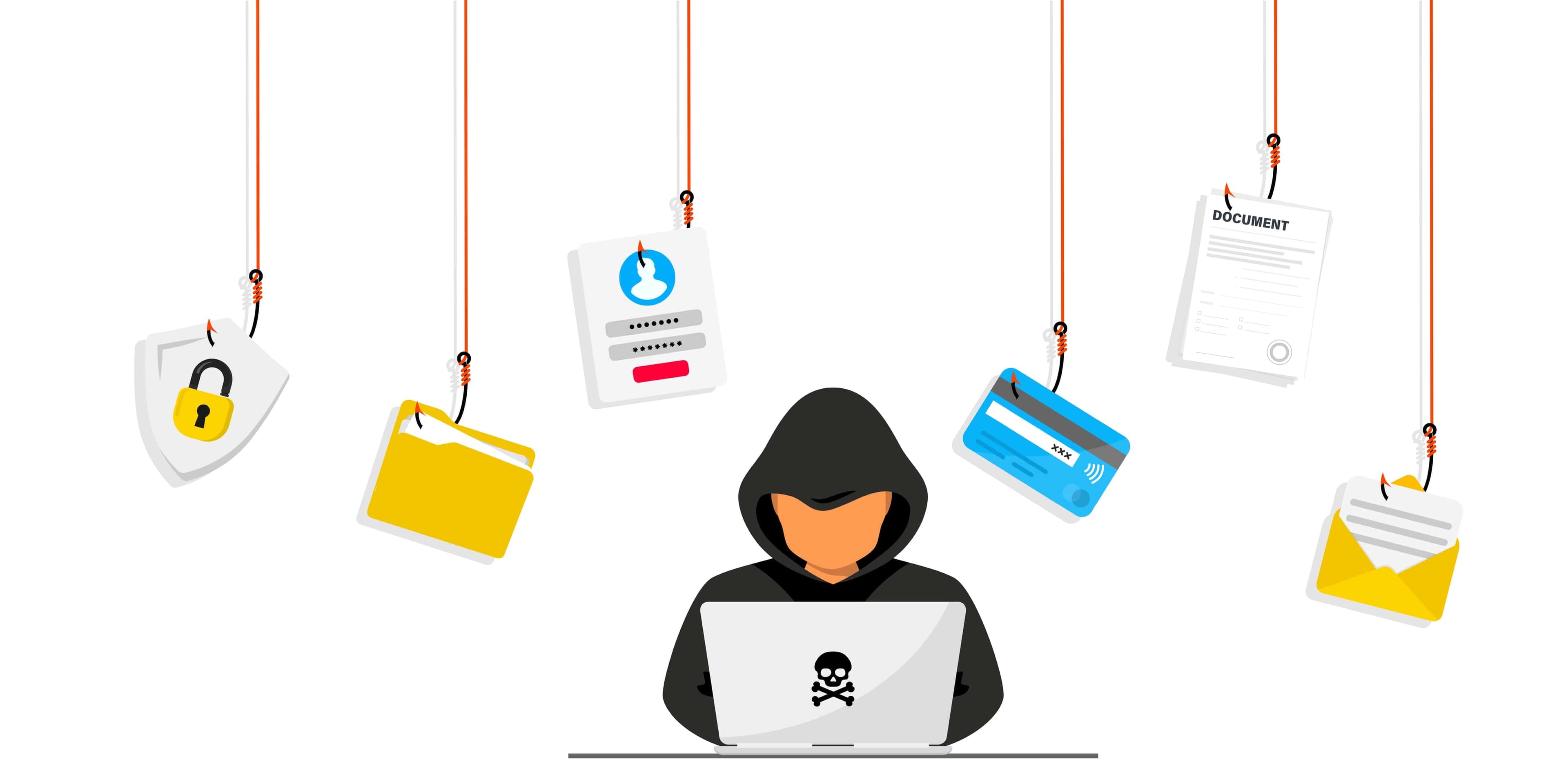
Every tax filing season, scammers reach people through email, text, phone calls, social media, fake websites, and malicious software, targeting taxpayers, businesses, and tax professionals alike.
The IRS's 2026 Dirty Dozen names 12 scams and schemes to watch for this year. Some are old tactics with a new coat of paint; others lean on newer technology and more sophisticated fraud techniques than in past years.
These Are the Top 3 (and Why)
The IRS doesn't actually rank the Dirty Dozen by how common or costly each scam is. All 12 are presented as equally flagged threats, with no official "most dangerous" list. So here's ours, and the basis for it: these three don't require you to be self-employed, own a business, or donate to charity to be a target. Just having an inbox, a phone number, or the ability to create an IRS Online Account is enough.
- IRS impersonation by email and text (phishing and smishing): the widest net of any scam here, since it costs a scammer almost nothing to send.
- AI-enabled IRS impersonation by phone: the same audience as #1, now harder to catch thanks to voice-mimicking technology and spoofed caller ID.
- Identity theft involving IRS Online Account access: anyone who has, or could create, an IRS Online Account is exposed, whether or not they've ever logged into one.
The other nine scams target narrower groups instead: people who give to charity, self-employed filers, taxpayers carrying IRS debt, or tax professionals themselves. If you're short on time, start with the three above, then skip to whichever of the rest applies to your situation.
1. IRS Impersonation by Email and Text
Phishing and smishing messages claim to come from the IRS: an unpaid bill, an available refund, an account that suddenly needs verification. If you get a message about a possible refund, learn how to verify an IRS refund notice before doing anything else.
Some of these messages route you to fake IRS websites built to steal your personal or financial information. Others skip the IRS altogether and spoof login pages for popular tax-prep and accounting platforms instead, harvesting your credentials directly. Intuit has issued its own warnings about phishing scams impersonating TurboTax and QuickBooks.
What to do: Don't click unexpected links, scan suspicious QR codes, or open attachments. Verify directly through IRS.gov instead, then forward the message to phishing@irs.gov (see the reporting section below).
2. AI-Enabled IRS Impersonation by Phone
Phone scams got a technology upgrade. Computer-generated voices, voice mimicry, robocalls, spoofed caller ID: all of it aimed at making a scam call sound real.
Be cautious of any call that demands immediate payment or threatens arrest or deportation. If you get one claiming to be the IRS, hang up and verify independently; don't call back a number the caller gave you. The IRS routes reports of impersonation phone calls to a separate agency built for exactly this: the Treasury Inspector General for Tax Administration (TIGTA) (see the reporting section below).
3. Fake Charities
Scammers exploit generosity, especially after disasters or tragedies. A fake charity can collect donations or, just as often, personal information.
Verify an organization's tax-exempt status before donating. The guide to verifying charitable donations and avoiding fake charities walks through how, and the IRS Tax Exempt Organization Search tool can confirm eligibility directly.
A good cause deserves your donation. A scammer does not.
4. Misleading Tax Advice on Social Media
Social media can teach you something real about taxes. It can also hand you a "tax hack" that gets you audited.
These social media schemes rely on making bad advice go viral fast, encouraging you to claim tax credits or fake deductions you don't qualify for, or even fabricate self-employment income to inflate a refundable credit. That path leads to refund delays, penalties, and audits, not free money. Verify a tax tip through the IRS or a reputable tax professional before you act on it.
5. Identity Theft Involving IRS Online Account Access
Your IRS Online Account holds sensitive tax information, which makes it a prime target for both identity theft and outright data theft. Scammers use stolen personal information to break in, or pose as helpful third parties offering to set the account up for you, only to collect what you hand over in the process. A compromised account is also a common way scammers redirect a refund's direct deposit to an account that isn't yours, or file a false tax return in your name before you do. That's a form of tax refund fraud, and it can delay your real refund for months while the IRS sorts out which return is legitimate.
Set up and manage your IRS Online Account directly through IRS.gov. An IRS Identity Protection PIN (IP PIN) adds another layer of protection against tax identity theft scams.
6. Abusive Undistributed Long-Term Capital Gains Claims
New for 2026: the IRS has flagged a rise in overstated or fabricated claims tied to Form 2439, Notice to Shareholder of Undistributed Long-Term Capital Gains, often connected to investment funds or REITs. Improper claims risk refund delays, penalties, audits, or worse.
If you're not sure a form or credit applies to you, don't guess. Get reliable advice first.
7. Bogus "Self-Employment Tax Credit" Promotions
A broad "Self-Employment Tax Credit" gets marketed as an easy path to a large refund. Most people who file the claim don't actually qualify, and the IRS is reviewing these closely. It's not the only credit that's drawn scrutiny: Employee Retention Credit (ERC) claims filed back in 2020-2023 are still under active IRS enforcement, even though ERC scams don't appear on this year's Dirty Dozen. Be skeptical of any social media post promising easy money or a guaranteed refund.
8. Ghost Preparers
A ghost preparer files your return without signing it or providing a valid Preparer Tax Identification Number (PTIN).
The IRS is direct about this: paid preparers must sign returns and include their PTIN, and per the Taxpayer Advocate Service's guide to choosing a preparer, you're legally responsible for everything on your return even when someone else prepares it.
Quick preparer check, before you sign anything:
- Does the preparer have a valid PTIN, and are they willing to give it to you?
- Will they sign the return themselves, in the paid-preparer section?
- Do they let you review the completed return before it's filed?
- Are they asking you to sign a blank or incomplete return? (Never do this, regardless of how rushed things feel.)
If the answer to any of the first three is no, or the last one is yes, that's reason enough to walk away.
9. Noncash Charitable Contribution Schemes
Some schemes involve inflated valuations or appraisals of donated property, marketed as a way to dramatically cut your tax liability. Keep real documentation of legitimate contributions, and make sure what's on your return reflects it accurately. An inflated appraisal doesn't just risk your deduction; it risks penalties on top of the disallowed amount.
10. Overstated Withholding Schemes
Some scammers push taxpayers to report false income or fabricated withholding numbers, falsely reported on a W-2 or 1099, to manufacture a bigger refund. The IRS can and does compare what you report against employer and third-party records. If the numbers on your return don't match your actual income and withholding, don't file them just because someone online promised a bigger check.
11. Spear-Phishing and Malware Targeting Tax Professionals
Tax professionals and firms are targets too. A convincing email posing as a new client, requesting tax documents, can carry a malicious link or attachment designed to steal client data or breach a firm's systems.
Unexpected document requests, unfamiliar senders, urgent demands, suspicious links: all deserve a second look before responding. A "new client" email isn't always what it looks like. The IRS's Security Summit coalition publishes ongoing guidance for tax professionals on protecting client data, including what to do if a firm's systems are already compromised.
12. Offer in Compromise Mills
An Offer in Compromise (OIC) is a legitimate IRS program that can let eligible taxpayers settle tax debt for less than they owe. Legitimate IRS tax debt relief options are worth understanding before paying anyone for help.
OIC mills (sometimes marketed more broadly as "tax resolution" services) advertise aggressively, promising "pennies on the dollar" settlements, and charge high fees even to taxpayers who don't qualify. Eligibility actually depends on income, expenses, assets, and ability to pay, and the IRS offers a free Pre-Qualifier Tool to check.
If someone guarantees you'll settle for a fraction of what you owe, that's the moment to slow down.
Taking Action Against Tax Scams: Reporting and Protecting Yourself
If you run into a tax scam, or think your information may be compromised, don't panic. Take these steps instead.
- Verify the communication. Confirm anything claiming to be from the IRS through official channels first.
- Don't engage. No response, no personal or financial information.
- Don't click. Links, QR codes, attachments: skip them in unexpected communications.
- Report it through the right channel. It depends on how the scam reached you:
- Phishing email or text: forward it to phishing@irs.gov. Put "IRS" or "Treasury" in the subject line for email, "Text" for a forwarded text message.
- Phone call impersonating the IRS: report it to the Treasury Inspector General for Tax Administration (TIGTA) Hotline, or call 800-366-4484; this is the agency that handles IRS impersonation calls.
- Identity theft, or your tax return was rejected because a return was already filed in your name: follow the IRS's taxpayer guide to identity theft and get a personalized recovery plan at the Federal Trade Commission's IdentityTheft.gov.
- A tax preparer or promoter running an abusive scheme: report it directly to the IRS.
- Preserve the evidence before you delete anything. Save the original email (with headers, not just a screenshot of the text), note the phone number and time of any call, and keep any account statements showing unauthorized activity. You'll want these on hand for whichever agency you report to.
- Protect compromised accounts. If your tax identity has been stolen, follow the identity-theft steps above and watch your financial accounts closely. A free fraud alert or credit freeze with the three credit bureaus (Equifax, Experian, TransUnion) can usually be set up in minutes, and an ongoing identity-monitoring service (LifeLock and similar providers offer this) can flag new accounts opened in your name after the fact. The Federal Communications Commission's guidance on avoiding tax scams and taxpayer ID theft adds more detail on recognizing scam communications.
- Stuck on an ongoing IRS problem? If you're not the victim of a scam but you're stuck in an unresolved issue with the IRS itself, the Taxpayer Advocate Service provides independent help for taxpayers who qualify, grounded in your taxpayer rights under the Taxpayer Bill of Rights, separate from any of the scam-reporting channels above.
- Educate others. The more people who recognize these patterns, the harder they are to pull off. Government-impersonation fraud isn't limited to the IRS, either. The Social Security Administration's National Slam the Scam Day, held each March, raises awareness of the closely related scams that target Social Security recipients.
For the latest official information, see the IRS warnings about tax scams during tax season and the IRS 2026 Dirty Dozen tax scams guidance. Both are updated by the IRS as new scams emerge, so it's worth a periodic re-check rather than relying on any single guide, including this one, as the final word.
Navigating Tax Season with Vigilance and Knowledge
The specific scams change year to year, but the warning signs don't: unexpected contact, pressure to act immediately, requests for sensitive information, promises that sound too good to be true.
This year's twist is technology: AI making impersonation more convincing, social media spreading bad advice faster than anyone can correct it. The defense hasn't changed, though: stay informed, slow down, verify before you act.
If a tax deal sounds too good to be true, it probably is.
If you filed for a federal extension earlier this year and are working toward the October 15 deadline (or a scam has eaten into the time you had to prepare), see how the federal tax extension works for what's still possible before that date.
Taxes are complicated enough without scammers making it worse.


