




Qualifying Surviving Spouse (Formerly Widow/Widower) IRS Rules for Filing Status
Fact Checked
FileTax.com content is reviewed for accuracy, timeliness, and completeness. It undergoes a structured editorial review process involving writers and expert reviewers.
More on our editorial standards Meet our editorial team Andrew WalshCPA, CFP CTFA & Tax Content Specialist
 Lea Uradu, JDTax Content Reviewer
Your Takeaways:
- Qualifying Surviving Spouse (QSS) is an IRS filing status available for two tax years after the year your spouse died.
- You must have a qualifying dependent child, meet IRS home maintenance rules, and not remarry, to qualify.
- QSS uses the same tax rate schedule and standard deduction as Married Filing Jointly.
- The year of death is not counted toward the two-year QSS period.
- After the two-year window ends, you must switch to Head of Household or Single, depending on your circumstances.
Qualifying Surviving Spouse status lets you use joint tax rates for two years after your spouse dies if you haven’t remarried, have a qualifying dependent child, and meet IRS home requirements.
The Qualifying Surviving Spouse IRS filing status (also called Qualifying Widow or Widower) determines whether a taxpayer can access the same tax benefits available to Married Filing Jointly filers for a limited time. The definition, found in IRS Pub 501 and Form 1040 Instructions, requires the taxpayer to meet specific criteria for two tax years following the spouse's death.
This article breaks down the IRS definition itself, staying squarely within the rules, terminology, and citations the IRS uses.
If you want the full checklist of eligibility tests, visit our guide on QSS Requirements. If you need rules for the year your spouse died, see our Death of a Spouse guide.
Filing Status Options
When your spouse passes away, choosing the right tax filing status really matters. It’s one of the most important decisions on your federal tax return, and the IRS gives you several options—each with different rules and tax benefits.
Let’s break them down, one step at a time.
Qualifying Surviving Spouse (QSS)
This is a special status designed to help families transition financially after a loss.
You may qualify if:
- You have a dependent child who lives with you
- You meet all IRS requirements
Why it’s valuable:
- Available for up to two years after your spouse’s death
- Uses the same tax rates as Married Filing Jointly
- Comes with the highest standard deduction
(For 2026, that’s $32,200)
In short, this status often provides the most tax savings if you qualify.
Married Filing Jointly (for the year of death)
For the tax year your spouse passed away, you can usually still file a joint return.
What to know:
- You keep the same tax benefits you had before
- You can file one final joint return together
Important catch:
If you remarry before December 31 of that year, you cannot file jointly with your deceased spouse.
Head of Household
This option may work if you don’t qualify for QSS but still support dependents.
You may qualify if:
- You have a qualifying dependent child
- You pay more than half of your household expenses
Benefits include:
- A higher standard deduction than Single filing
- More favorable tax brackets
(Which usually means a lower tax bill)
Single Filing Status
If none of the above options apply, you’ll likely file as Single.
What that means:
- Lower standard deduction
- Different (less favorable) tax brackets
That said, you may still qualify for helpful credits like:
- Child Tax Credit
- Earned Income Credit
How This Typically Plays Out
For many surviving spouses, the timeline looks like this:
- Year of death: File Married Filing Jointly
- Next two years: Use Qualifying Surviving Spouse (if eligible)
- After that: File as Head of Household or Single, depending on your situation
Don’t Stop at Filing Status
Your filing status is just one piece of the puzzle. Be sure to review:
- Child and education tax credits
- Capital gains tax rates
- State tax rules
- Changes in income or expenses
All of these can impact your final tax bill—and your peace of mind.
If you want help choosing the best option (without the headache), that’s exactly what we’re here for.
What is the IRS Definition of a Qualifying Surviving Spouse? (Pub 501 + Form 1040)
The IRS gives this filing status two names: Qualifying Surviving Spouse and Qualifying Widow or Widower. You will see both versions throughout Pub 501 and the Form 1040 Instructions. The agency treats the terms as equivalent and describes the status as a type of tax filing status that applies only to certain taxpayers whose spouse passed before the current tax year. The definition itself is brief, but the IRS spreads its components across multiple publications, which is why many taxpayers find it confusing.
Below is the core IRS statement taken directly from IRS Publication 501. The language clarifies the official definition of a qualifying surviving spouse.
IRS Definition Overview
The IRS defines the qualifying surviving spouse filing status across several sections of Publication 501 and the Form 1040 Instructions. In those documents, the IRS explains that a taxpayer may use the qualifying surviving spouse status for the two tax years following the year a spouse died, as long as the taxpayer:
- Has not remarried during those later years
- Has a qualifying child who can be claimed as a dependent
- Meets the IRS criteria for maintaining a home for that child
IRS materials also clarify that filing status determines access to the Married Filing Jointly tax rules for those two years. Together, these elements form the IRS's definition of filing status, even though the agency does not present them in a single paragraph.
Once the IRS defines who may use the status, the next piece of the definition is the timeline itself.
What is the Two-Year Timeline for Qualifying Surviving Spouse Status?
Qualifying Surviving Spouse status applies only for the two tax years after the year your spouse died, and the year of death does not count as one of those two years. Our Qualifying Surviving Spouse timeline walks through each year.
Source: IRS Pub. 501, Qualifying Surviving Spouse
What Are the IRS Conditions for Qualifying Surviving Spouse Status?
The IRS definition sets out the requirements that must be met for the QSS classification to apply. Pub 501 and the Form 1040 Instructions do not list these conditions as a step-by-step checklist, but they clearly identify three foundational elements of the definition. This section restates those elements exactly as they appear in IRS materials while avoiding the deeper rule explanations covered in other subclusters.
A key part of qualifying surviving spouse status is having a "qualifying person" as defined by the IRS. This includes certain relatives, such as an adopted child, foster child, or even a kidnapped child, provided they meet the IRS criteria.
You can find the full eligibility breakdown, support test rules, residency requirements, and dependent criteria in our QSS Requirements guide.
When reviewing dependent criteria, note that a qualifying child can also be a full time student or, in some cases, a qualifying relative.
For residency requirements, temporary absences—such as for school, medical treatment, or other special circumstances—may still allow a child to be considered as living with the taxpayer.
Here are the three components referenced in the IRS definition language.
1. The taxpayer has not remarried
The IRS requires that the taxpayer has not remarried at any point during the tax year. According to Pub. 501, remarriage immediately ends eligibility for Qualifying Surviving Spouse status. If you have a new spouse due to remarriage, you are no longer eligible to file as a Qualifying Surviving Spouse. The Form 1040 Instructions reinforce the same point using similar language.
2. The taxpayer has a qualifying child who can be claimed as a dependent
Pub 501 states that the taxpayer must have a qualifying child whom they can claim as a dependent. This child must have lived with you for the entire year, with exceptions for temporary absences (such as school or medical care). The dependency rules are intricate, involving three main tests:
- Residency Test
- Relationship Test
- Support Test
Special filing requirements may also apply if the child filed a tax return or had gross income above certain thresholds.
If you want to learn about how to claim a dependent child, check out our Head of Household qualified dependent guide.
3. Meeting the IRS Home Maintenance Requirements
Pub 501 states the surviving spouse must keep up a home that is the qualifying child’s main home for the entire year, and generally must pay more than half of the household maintenance costs. Examples of household expenses that count toward this requirement include home insurance, mortgage interest, medical treatment, utilities, property taxes, and food.
Pub 501 does not break this requirement into steps and does not ask the taxpayer to calculate household costs within the definition itself.
Why the IRS Uses Joint Return Tax Rates for Qualifying Surviving Spouses
In Pub 501, the IRS explains that the Qualifying Surviving Spouse filing status uses the joint return tax rates. This terminology is part of the definition itself, not a comparison to other filing statuses.
Here is what the IRS means when it uses that phrase:
- The rate schedule for qualifying surviving spouses is the same table used for taxpayers who file a joint return.
- This applies only during the two tax years in which the IRS definition allows the Qualifying Surviving Spouse status.
- The IRS is referring to how income is taxed, not whether the taxpayer is filing a joint return with a deceased spouse.
The IRS uses this terminology to clearly assign Qualifying Surviving Spouse filers to the Married Filing Jointly rate structure, which is a component of the filing status definition. This section does not explain Married Filing Jointly rules or tax bracket calculations, because the IRS only uses “joint return tax rates” to label the correct rate schedule for the QSS definition. Those topics fall outside the scope of this guide and belong in other IRS publications and in our QSS Tax Standard Deduction and Tax Credits page.
Overall, Pub 501 uses the term “joint return tax rates” to identify the correct rate schedule for the Qualifying Surviving Spouse status, thereby keeping the definition consistent with the IRS framework.
How the Form 1040 Instructions Explain the QSS Filing Status
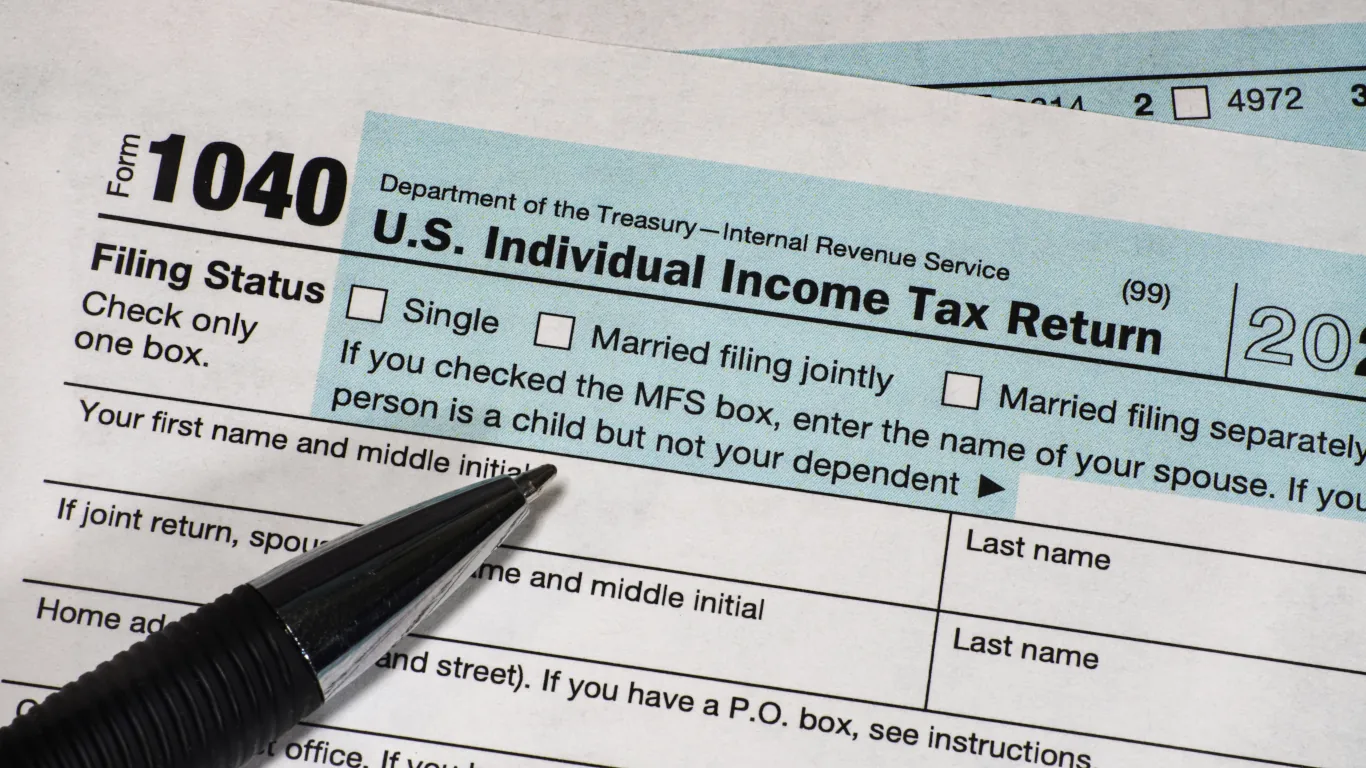
The Form 1040 Instructions reinforce the IRS definition of the Qualifying Surviving Spouse filing status by explaining how it appears on the tax return and where taxpayers can find the official rules.
The Instructions list “Qualifying Surviving Spouse (Qualifying widow or widower)” as one of the filing statuses a taxpayer may select. They clarify that the definition itself comes from Pub 501, which remains the IRS’s authoritative source for all filing status definitions. Taxpayers may need to choose between Single, Married Filing Jointly, Married Filing Separately, Head of Household, or Qualifying Surviving Spouse, depending on their situation.
To help taxpayers identify the tax filing status on the return, the Instructions:
- Show where to check the Qualifying Surviving Spouse box
- Note that the status applies only if the filer meets the IRS definition
- Direct filers back to Pub 501 for the complete explanation
The Instructions avoid expanding on the underlying dependency rules, remarriage rules, or household requirements, because those appear elsewhere in IRS publications.
They also note which tax rate schedule applies when the tax filing status is used. The Instructions state that qualifying surviving spouse filers use the same table that applies to joint returns, mirroring the terminology in Pub 501. They do not provide filing steps or rate calculations. Income requirements and the choice to itemize deductions versus taking the standard deduction can affect federal taxes owed, so it is important to review which option is most beneficial for your situation, especially if you are considering married filing separately or other filing statuses.
Overall, the Form 1040 Instructions serve as a high-level bridge between the tax form and the IRS definition. Their role is to label the status correctly, point the taxpayer to Publication 501 for the full criteria, and confirm the tax rate schedule that applies without expanding the definition itself.
For more information about e-filing steps, worksheet examples, or direct filing guidance, visit our Qualifying Surviving Spouse guide hub.
Summary of the IRS Definition of a Qualifying Surviving Spouse
The status uses the same tax rate schedule as that for Married Filing Jointly filers. Some rules that apply to Married Filing Jointly may not apply to a Qualifying Surviving Spouse, so the tax benefits overlap but aren’t identical. It is a narrow and highly specific definition, which is why IRS publications consistently direct taxpayers back to Pub 501 for the official language.
To explore who actually qualifies under that definition, see QSS Requirements. For rules tied to the year your spouse died or how to handle joint returns, visit the Death of a Spouse page.
Take Control of Your Filing Status.
We know these rules can feel overwhelming. You don't have to figure this out alone. FileTax.com makes it simple to find your best filing status. We help you claim every benefit you deserve. Our platform guides you through federal and state returns with confidence. Whether you're filing as a surviving spouse for the first time or need help with your options, we're here to support you through every step.
Take control of your taxes. File on your own with expert support today.


