



What Happens If You File Single While Married? Penalties, Risks & Key Insights
Fact Checked
FileTax.com content is reviewed for accuracy, timeliness, and completeness. It undergoes a structured editorial review process involving writers and expert reviewers.
More on our editorial standards Meet our editorial team Andrew WalshCPA, CFP CTFA & Tax Content Specialist
 Lea Uradu, JDTax Content Reviewer
Your Takeaways:
- Generally, you can’t file as Single if you’re legally married (unless divorced or legally separated by Dec 31).
- The IRS cross-checks Social Security, spouse filings, and public records—so filing Single while married raises red flags.
- Wrong status = missed credits (like EITC, Child Tax Credit) + possible back taxes, interest, and penalties.
- Accidental misfiling is fixable with Form 1040-X (within 3 years).
Filing taxes isn’t exactly a party, but filing under the wrong status? That’s a headache you don’t want. If you’re legally married but filed your federal return as ‘Single,’ the IRS may flag your return due to ineligibility for that filing status under current tax rules. Let’s break down what happens if you file single while married, why it matters, and how to fix the mistake before it becomes a financial nightmare.
Introduction to Filing Statuses
Before we dive into penalties and paperwork, let’s start with the basics: the five filing statuses. The IRS recognizes five primary tax filing statuses:
- Single: This status is for individuals who are unmarried as of December 31. It’s the simplest, with standard tax rates and deductions.
- Married Filing Jointly (MFJ): This status is for married couples who file one combined tax return. It often results in the best tax benefits.
- Married Filing Separately (MFS): This is for married couples filing separately. It may be beneficial in specific situations, but it generally comes with fewer credits.
- Head of Household (HOH): For unmarried or “considered unmarried” individuals who pay more than half the cost of maintaining a household and have a qualifying dependent.
- Qualifying Surviving Spouse: For individuals whose spouse passed away in the last two years and who have a dependent child. Offers similar benefits to MFJ.
Filing Status | Who Can Use It | Pros | Cons |
|---|---|---|---|
Unmarried on Dec 31 | Simple return, standard deduction | Not available to married people | |
Legally married on Dec 31 | Best credits/tax deductions | Joint liability | |
Legally married on Dec 31 | Separate liability | Fewer benefits | |
Considered unmarried with a dependent | Better than Single status | Strict qualifications | |
Spouse died within the last 2 years and has a dependent child | Retains MFJ benefits, higher deduction | Only valid for 2 years, must support a child |
Choosing the right one is crucial because it determines your tax brackets, standard deduction, and credit eligibility. Use the IRS Filing Status Tool to help you decide on the right filing status.
Understanding your tax brackets is only part of the picture. It's also important to know when you can file your taxes, since timing affects how and when those brackets apply.
Can You File Single or Head of Household If You're Married?
Let’s cut to the chase: In most cases, you can’t file as Single if you’re legally married on December 31. Most married taxpayers file Married Filing Jointly or Married Filing Separately.
Some people may qualify as Head of Household under the IRS ‘considered unmarried’ rules, and some taxpayers who are legally separated by year-end may be treated as unmarried for filing purposes.
Example: Taylor and Morgan finalized their legal separation on October 1. Taylor can use the single filing status since they remained legally separated through December 31.
Just because you qualify as "considered unmarried" for Head of Household (HOH) status doesn't mean you're considered unmarried for everything on your tax return. The IRS has special rules: you might meet the HOH test but still not qualify as "unmarried" for other tax benefits, such as the Earned Income Credit (EIC). In short, being "considered unmarried" is a label that only applies to certain parts of your return, not all of it.
Filing as Head of Household
You generally can’t file as Head of Household (HOH) if you’re married, but there’s an exception.
You may qualify as “considered unmarried” for HOH if all of the following apply:
- You were legally married on December 31.
- You lived apart from your spouse for the last 6 months of the year.
- You paid more than half the cost of keeping up your home.
- A qualifying child lived with you for more than half the year.
HOH status typically offers a higher standard deduction and better tax brackets than filing separately—but strict rules apply.
👉 For full eligibility details and examples, see our Head of Household guide.
Is It Illegal to File Single While Married?
Short answer: Yes—if it’s done intentionally.
Filing under the wrong status by mistake is generally treated as a correctable error.
However, knowingly choosing “Single” to reduce your tax bill or increase your refund can cross into fraud. Federal tax law prohibits willfully submitting false information on a tax return (see IRC §7206) and attempting to evade tax (IRC §7201).
So when people ask, “Is it illegal to file single while married?”
The key distinction is intent.
An honest mistake is typically fixable. Intentional misfiling may be illegal.
If you meant this instead…
If you're really asking... | Best page |
|---|---|
Should we file jointly or separately? | |
We got married late in the year—what changes? | |
How do we update W-4 after marriage? |
Real Consequences: File Single While Married Penalties
Let’s look at the IRS penalties for filing single while married and what steps to take if this happens. Even if it's unintentional, misfiling a tax return comes with financial consequences:
- Back taxes: You’ll owe the difference between what you paid and what you should have paid.
- Interest & accuracy-related penalties: Your misfiling can lead to underpayment of taxes. You face an accuracy-related penalty under IRC §6662 if you underpaid by 10% of the actual taxes owed or $5,000, whichever is greater. The penalty is 20% of the amount attributed to your filing status mistake. The IRS also charges interest on penalties.
- Loss of tax credits: If the IRS determines you weren’t eligible due to your filing status, credits like the Earned Income Tax Credit (EITC) or the American Opportunity Tax Credit may be disallowed, which could increase your tax due and trigger interest or penalties.
Wondering “What is the penalty for filing the wrong status?”—expect a combo of back federal income taxes, interest, and stress.
Did You Know? The IRS doesn’t always automatically charge the 20% penalty. If you can show “reasonable cause,” they might waive it. But you must respond with documentation—don’t ignore their notice.
Situation | What can happen | What you can do |
|---|---|---|
Wrong status (honest mistake) | IRS notice, recalculation, tax due | Amend with 1040-X, pay balance |
Underpaid tax | Interest + possible accuracy penalty | Pay ASAP, keep documentation |
Claimed credits you didn’t qualify for | Credit disallowed + balance due | Amend, respond to notice |
Intentional misreporting | Civil penalties; rare criminal exposure | Get professional help |
How the IRS Knows You're Married
Spoiler alert: the IRS has receipts, and not just the paper kind.
The IRS uses multiple data sources to determine whether you're married on December 31 of the tax year. So if you’re wondering how they know your relationship status, here’s how the dots get connected:
Social Security Administration (SSA) Sync
Your marital status changes after marriage, which is connected to your Social Security Number. When you change your name or marital status with the SSA, that info makes its way to the IRS. If your tax return says “Single,” but the SSA shows you got hitched last summer? That’s a red flag.
Dual Filings = Double Trouble
If your spouse files a return as “Married Filing Jointly” or “Married Filing Separately” and your return says “Single,” the IRS’s computers go, “Hmm…” They’re checking for consistency across both SSNs.
Public Records
The IRS can cross-reference public marriage records, especially in audit scenarios. They’re not actively snooping into your love life, but the data is there if they need to verify.
Bottom line: The IRS isn’t psychic, but they are data wizards. Trying to sneak in a “Single” status when you’re not? Odds are, they’ll catch it.

Common Filing Status Red Flags That Raise Eyebrows at the IRS
Think of the IRS like a nosy neighbor with a magnifying glass; they may not see everything, but they’re quick to spot something that looks off. Filing status mistakes are one of the easiest ways to catch their attention. Here are a few red flags that might trigger scrutiny:
1. Mismatched Marital Status Between Spouses
If one of you files as “Married Filing Jointly” and the other claims “Single,” that’s a big ol’ tax-time contradiction. The IRS systems are designed to catch inconsistencies between linked Social Security Numbers.
2. Claiming Head of Household Without Qualifying
Trying to snag the Head of Household benefits without meeting the rules? If you don’t have a qualifying dependent or didn’t live apart from your spouse for the last 6 months of the year, this one’s a no-go.
3. Public Record Discrepancies
Marriage records are public. If your filing status doesn’t align with these records, especially after a name change, the IRS can cross-reference this info during an audit.
Quick tip: When in doubt, honesty is always your best (and safest) option.
Why Do People File Single By Mistake?
Honest mistakes happen. Here’s why people accidentally (or not-so-accidentally) file as Single:
- Recently married and unsure of the new married filing status
- Using DIY tax tools without guidance
- Poor communication between spouses
- Assumption that "Single" = better refund (Spoiler: not always true)
If this sounds familiar, you’re not alone—and the good news is, it’s fixable. The IRS allows you to correct your filing status by amending your tax return, and doing so can help you avoid unnecessary penalties or missed credits. Whether it was a misunderstanding, a software misstep, or just plain confusion, taking the right steps now can save you stress and money later.
How to Fix an Incorrect Filing Status
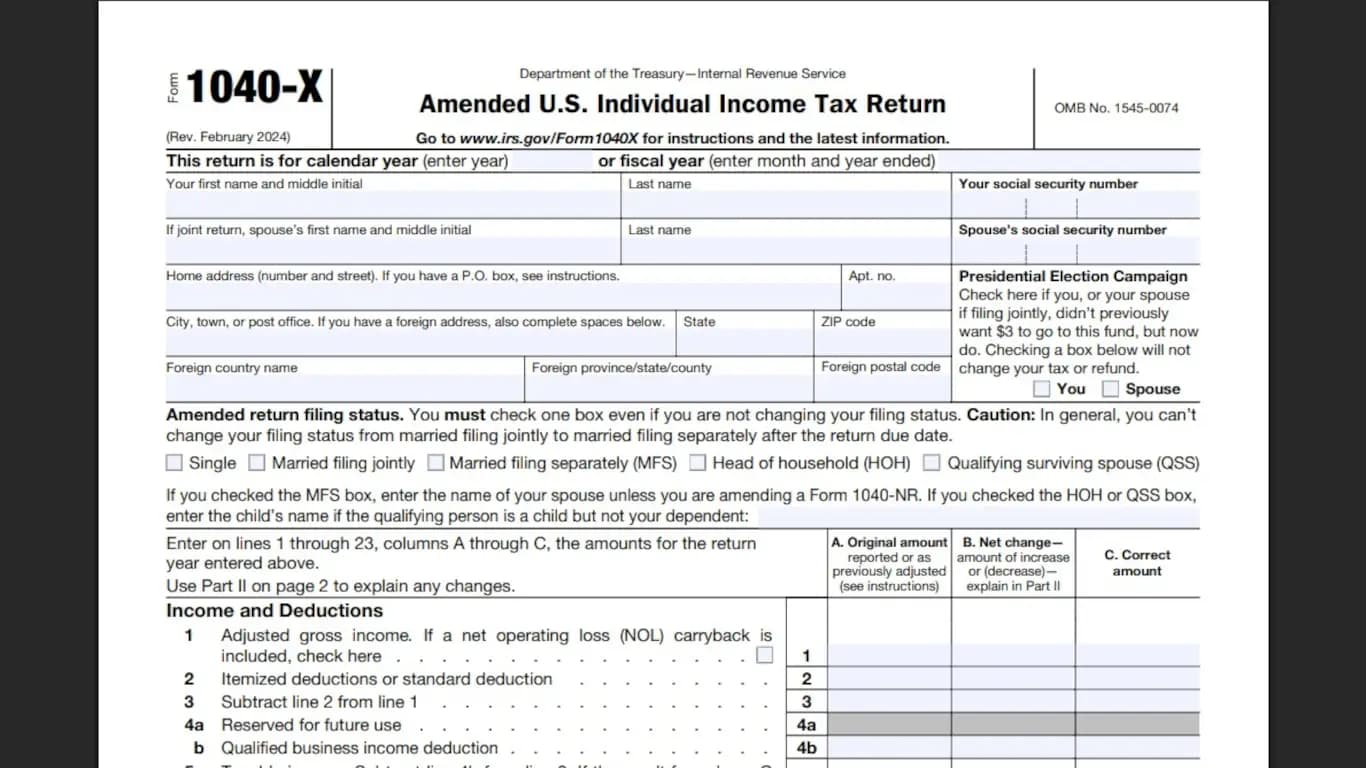
Oops. You filed as Single but should’ve filed jointly—or at least MFS. Here’s how to fix your federal tax return:
- File Form 1040-X, the IRS form used to amend a previously filed tax return.
- You typically have up to 3 years from the original filing date.
- If you have tax liability, pay ASAP to stop interest from snowballing.
- If your tax refund was too high? Yep, the IRS wants that money back.
Still unsure? This is a great time to call in a CPA or tax pro.
When Is Filing Separately Okay?
Filing Married Filing Separately (MFS) may be appropriate in situations like:
- One spouse wants to keep tax liability separate.
- There are concerns about a spouse’s unpaid taxes or about the accuracy of their reporting.
- One spouse has high medical expenses (since deductions are income-based).
- Income-driven student loan repayments are calculated separately.
- Couples are separated but not yet divorced.
- There are legal or financial reasons to avoid joint liability.
Keep in mind: MFS often limits credits and deductions compared to those available under Married Filing Jointly (MFJ). That's why many couples file as MFJ when filing taxes for the first time after marriage. If you’re unsure which filing status fits your situation, you can use a Federal Tax Calculator to estimate your tax and compare options side by side.
👉 For a full breakdown of benefits, drawbacks, and side-by-side comparisons, see our MFJ vs. MFS guide.
Tips to Avoid Filing Mistakes in the Future
No one wants to make the same mistake twice. Here’s how to stay in the clear:
- Check your marital status as of December 31
- Coordinate with your spouse before filing a tax return for the tax year—yes, even if you’re filing separately
- Use a trusted e-file service provider (not the “free” one that’s not really free)
- Consult the IRS Filing Status Tool if unsure. Check it here.
Final Word: Know Your Status, Avoid the Stress
Filing your taxes shouldn’t feel like stepping into a legal minefield. But it can be if you pick the wrong status, especially filing Single when you’re actually married. Marriage changes more than your relationship status; it shifts your tax world, too.
What changes after marriage can directly impact your return, from new filing options to shared income and credit eligibility. Whether you're filing jointly or opting for a separate return, choosing the correct status matters; from lost refunds to IRS letters, the fallout isn’t worth it.
Take a breath, double-check your status, and don’t be afraid to fix mistakes. Because when it comes to taxes, the smartest move is the honest one.
Need help sorting your filing status? Download the Newlywed Tax Start Kit. It can help you prepare for your next chapter in life.
FAQs: Filing Single While Married
If someone is legally married as of December 31, IRS rules generally do not allow them to file as Single. The recognized options are typically Married Filing Jointly or Married Filing Separately, unless legally divorced or separated by court order.


